

Don’t Make These Mistakes on Your Tax Return
Are you accidentally leaving a $5,000 “tip” for the IRS because of a simple data entry error? Even if you hire a top-tier CPA, half of all retirement tax returns contain deficiencies that could be costing you a fortune in double taxation and missed credits. Join Dr. Chris Mullis as he reveals his professional pre-flight checklist to ensure you keep every bit of the nest egg you worked so hard to build.
Retirement Big Picture
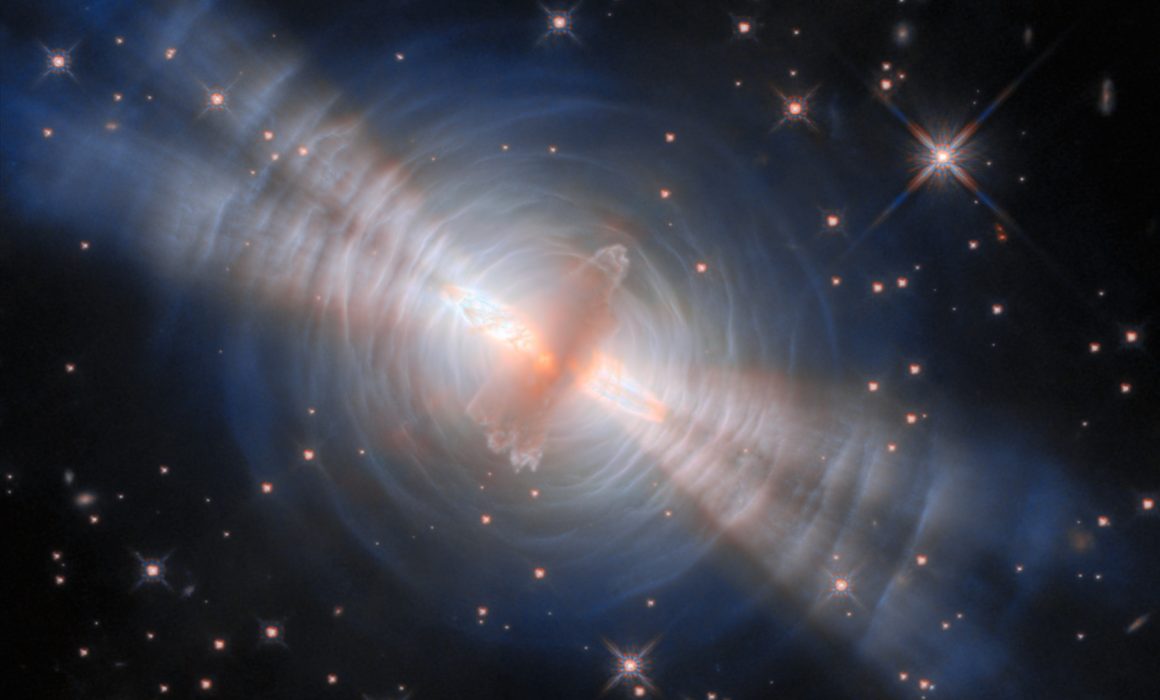
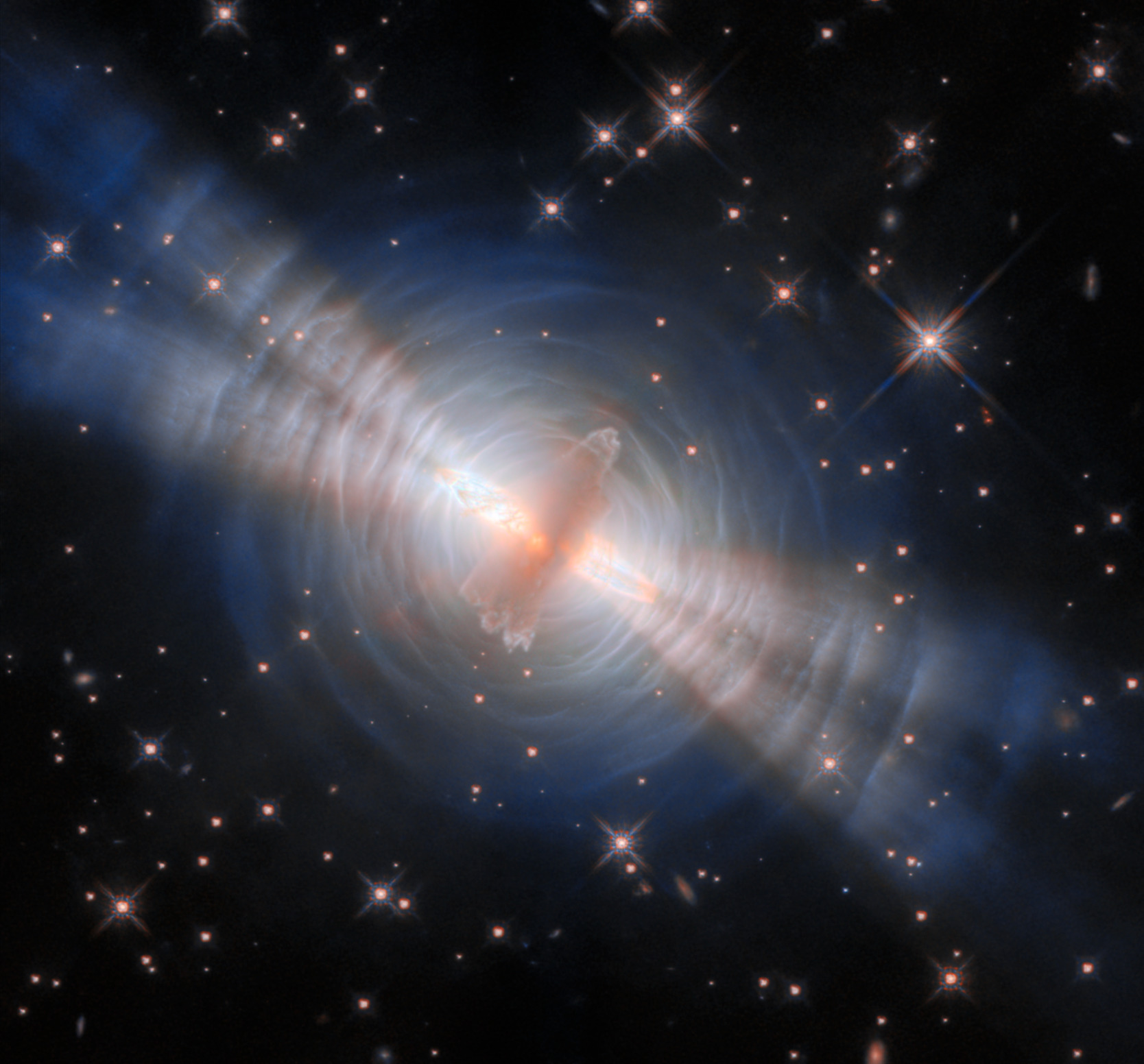
Dr. Chris bridges the gap between finance and the cosmos by examining the “Egg Nebula,” a star in a rare and frantic transition known as a pre-planetary nebula. Just as this star sheds its outer layers to seed the next generation of planets with carbon and silicon, your retirement represents a transition into a lasting legacy. It’s a powerful reminder that even as one primary mission ends, the impact and “star-stuff” you leave behind shape the future for those following in your orbit.
Image Credit: NASA, ESA, Bruce Balick (UWashington)

Sign Up for The Launch
The Launch is a weekly email from Dr. Chris and his team. It’s full of retirement tips, news, listener questions & more, straight from us to your inbox. Get smarter about retirement in just 5 minutes every week. Let’s go!
Episode Resources
Episode Transcript
Introduction
Dr. Chris Mullis, PhD, CFP®: Are you accidentally leaving a $5,000 tip for the IRS from double taxed, IRA distributions to forgotten state tax credits. Simple errors are costing diligence savers a fortune.
Today I’m sharing the checkpoints I use to save my clients thousands by catching mistakes before the tax return is submitted. Let’s make sure you get every bit of credit for the heavy lifting you did all year long and not leave a tip for the IRS. Are you ready?
Dr. Chris Mullis, PhD, CFP®: Welcome back to Retirement Isn’t Rocket Science. I’m your host, Dr. Chris Mulli. I spent my first career as an astrophysicist, mapping the cosmos with NASA’s space telescopes. Now as a certified financial planner with 21 years of experience, I help you navigate the universe of retirement. Our mission is simple.
Lower your taxes, strengthen your portfolio, and give you the confidence and capabilities to spend more. Buckle up. We’re going to master your money and explore the mysteries of the universe along the way.
Dr. Chris Mullis, PhD, CFP®: In today’s show, why do 50% of tax returns contain mistakes? And is yours one of them? What does it cost to have a CPA prepare your tax return, and why does that cost tier out to three distinct bans? We’re cracking the cosmic egg. We’re looking at a celestial grade, a discovery that proves even the most dramatic transitions can leave a legacy that lasts for billions of years.
Retirement Briefing Room
Dr. Chris Mullis, PhD, CFP®: Welcome to the retirement briefing room. This is where we huddle up to take a close look at important aspects of your financial life spotlight Pathways of Success and think about how to integrate these into your retirement mission plan
With tax preparation season ramping up, this is a very good time to talk about getting your tax return as accurate as possible. I want you to get full credit for the savvy tax planning you’ve executed the previous year.
I’ve reviewed thousands of returns over my 21 years as a retirement planner, here is a staggering statistic. I find deficiencies in 50% of the returns I review. That isn’t just DIY, big box software returns. I’m talking about returns prepared by the big four accounting firms in the US and some of the most established CPA shops in Charlotte.
Today we’re going to perform a pre-flight check on your tax return, so you can stop overpaying the IRS and start keeping more for your next adventure.
Three. Let’s begin by looking at the pro pitfalls, why big names don’t equal big accuracy. Now, you might be thinking, Dr. Chris, I pay a professional, a pretty healthy sum of money to do this, so I am safe. I don’t need to review my tax return. I’d say not necessarily true. Last year I caught four major errors from a top tier accounting firm for one of my clients.
That top tier firm reported a Roth conversion as non-taxable, which is nonsensical. They taxed this client’s capital gains twice because of a double entry, and they missed several state tax exemptions. And a local CPA with a great track record of near perfect returns.
Accidentally put a solo 401k contribution on the wrong schedule. That one mistake created a $5,000 tax difference for my client’s Bill. So why does this happen? Well, number one, tax preparers are very, very busy. They don’t have time to slow down. And number two, tax pros are often historians, they record what happened as your tax focus, financial planner.
We are the architects. We know the strategy behind the numbers, and we know what to expect. And if the historian doesn’t see the blueprint, they may miss some of the nuances.
Now let’s talk about getting the basics right, the launchpad check. Before we get to the complex maneuvers, we need to talk about the simple math. The management errors, these are the loose bolts that can sink a mission. First up, the 10 99 R. This is the form that reports your retirement distributions.
I’ve seen cases where a 10 99 R was entered twice by the preparer. One client’s income was overstated by $22,000. Because of this, suddenly you’re paying taxes on money. They never received on the flip side, do it yourselfers often forget to enter a 10 99 R entirely because they aren’t familiar with all the documents.
They should expect. Next quarterly estimated tax payments if you’ve been diligent about sending checks. Now we don’t actually send checks. We prefer electronic payments. So if you’ve been sending electronic payments to the IRS throughout the year, make sure those payments are actually listed on your return.
If your preparer misses those, the IRS will think you owe the full balance plus interest and penalties, even though you already paid now let’s talk about forgotten payments. Losses and the bridge year credits. Foreign tax credits are often missing from federal returns, especially for self preparers.
If you hold a globally diversified portfolio, it is very likely that you paid foreign income taxes through those investments. You can avoid double taxation by claiming a foreign tax credit.
The simplest way to see what foreign taxes you paid is to look at forum 10 99 diviv. That’s DIV,
next, here’s one that gets missed all the time. It’s the tax loss carry forward. Think of this as a gift from your past self. If you had an investment loss in a prior year that exceeded $3,000, you are allowed to carry forward the remainder into future years to offset your taxable income.
If you or your preparer doesn’t check last year’s return for a carryover, you’re essentially leaving a tax deduction coupon in the junk drawer,
And for my younger retirees, those are the folks that haven’t quite reached age 65 and qualifying for Medicare. Many of you are on the health insurance exchange, the a CA exchange. You must ensure your tax preparer files form 89 62. This form reconciles your premium tax credit. If your income was lower than expected, you might actually get money back.
If it was higher, you might owe. But skipping this forum is a fast track to an IRS love letter. You don’t want to receive.
Moving up the complexity scale, let’s talk about the Roth conversion and Form 86 0 6. The Roth conversion is one of the most powerful maneuvers in your arsenal. You’re moving money from a forever taxed bucket to a never taxed bucket, but the IRS needs to know the timing. If you do a large conversion in the latter part of the year.
The IRS might incorrectly assume you had that income spread across the year and hit you with an underpayment penalty, so even though you paid the tax that was due, they don’t think you did it in a timely manner. In the US tax code, we are required to pay the tax as the income is recognized. What you need to do is file form 2210 on your federal return.
The state equivalent to show the IRS and your state tax authority. Hey, I didn’t have this money in January. I got it in December. Now if you are a North Carolina filer, that’s form D as in Delta D 4 22 and in South Carolina it’s a more readily memorable SC 2210 following the nomenclature of the federal 2210.
And don’t forget form 86 0 6, if you’ve done a Roth conversion or if you’ve ever made a non-deductible contribution to a traditional IRA, you have basis that money. Money you’ve already paid taxes on.
If you’re preparer doesn’t track that basis on form 86 0 6, you will be taxed a second time when you take that money out. That’s like paying for the same gallon of rocket fuel twice.
Let’s not forget about your state income tax return. I want to highlight three items that are often missed. Number one, treasury interest. Did you know that interest from US treasuries is generally exempt from state taxes.
Many CPAs skip this because it takes some extra time to do the math around the 10 99 DIV. We actually do that math for our clients and it’s part of the tax letter We write and prepare to assist their CPA in building out their return.
And by the way, that exemption of state taxes on US government income applies across the board for all states.
Number. The second two items are state specific, so you’re gonna have to lean in to know which ones apply to you or not. And I try to articulate that for you here. The number two item is the foreign tax credit. Now, we talked about making sure you claim the foreign tax credit.
On your federal return. So that applies to everyone who’s paid foreign taxes through their investments. But now we’re talking about claiming a foreign tax credit or exemption on your state level return. And again, if you have a globally diversified portfolio, you’re likely paying taxes.
To foreign governments through those international holdings. Again, you get credit for that on your federal return through schedule three, but North Carolina is one of the few states that also gives a credit at the state level through Form D, 400 tc. That’s Delta 400, tango, Charlie, most do it yourself. Software won’t prompt you for this. At the state level, you have to know to flag it. When you enter your federal information, it’s a little bit paradoxical, right? In addition to North Carolina, these states have a foreign tax credit.
Alaska, Arizona, Hawaii, Indiana, Montana, and Oregon. So again, look for that opportunity for a foreign tax credit on your state return. The third thing to look at for your state return is an exemption around IRA distributions. Depending on where you live, your IRA distribution might be exempt.
For example, in South Carolina there’s a partial exemption that saves you hundreds if you know which box to check. There are five states that exempt 100% of your IRA distributions from state income tax. Those states are Illinois, Iowa, Michigan, Mississippi, and Pennsylvania. Now, that’s in addition to, of course, the states that have no state income tax, and there are eight states that have a partial exemption on IRA distributions, Georgia, New Jersey, Kentucky, Colorado, New York, . Delaware, South Carolina and Alabama.
So being aware of some of these common pitfalls and errors in omission can save you hundreds or thousands of dollars. At my retirement planning firm, we prepare a very custom and personalized tax letter for each of our families that we serve. Specifically for their CPA, it tells to prepare exactly what moves we’ve made, be it Roth conversions, qualified charitable distributions, tax loss, harvesting, and on.
So nothing gets lost and translation, and our client gets full credit for all the work that’s been done. Reviewing your draft tax return before submission is an important step to take. There is some complexity depending on your circumstances, so it’s best that your tax focused advisor does that review for you.
If you are doing this on your own, at the very least, carry out a year over year comparison lineup last year, return to this year’s. If your income is similar, but your total tax line is vastly different, you need to ask why and one of the best ways to get set for a great outcome is to make sure you didn’t miss anything on the inputs.
That’s why I have prepared a free guide for you. It’s entitled, what documents do I need to collect for filing my tax return? This very detailed checklist covers the key issues to consider when preparing to file your taxes, such as documents and information to gather from your sources of income, your potential tax deductions, your potential tax credits and other important nuances to consider when preparing to file your taxes.
You’ll find this great resource in this week’s newsletter and the resource notes from today’s episodes, you’ll find that at retirement isn’t rocket science.com/eleven. That’s 11 for episode 11, bringing today’s conversation to a close in regards to your tax prep. I want you to remember the IRS doesn’t give extra credit for overpaying.
They only care if you underpay. A successful retirement mission isn’t just about how much fuel you have in the tank, it’s about how much of it you actually get to keep for the journey. Don’t let a simple data entry error at the 11th hour change your financial trajectory.
Check those draft tax returns, verify your forms. And remember, you don’t need a PhD to master this chapter, but a good pre-flight checklist certainly helps.
Now let’s head over to Mission Control to answer your financial questions and get you retirement ready.
Ask Mission Control
In this week’s ask mission control. We’re staying on that theme of tax preparation. Listener, mark asks, how much should I expect to pay for a CPA to prepare my return
That’s a great question. Let’s talk real numbers. For a retired couple, you can typically expect to pay a professional between 500 and a thousand dollars for a standard annual tax return, but like a mission to Mars, the price depends on the complexity of your flight plan.
Let’s talk about three orbits of tax complexity. Number one is the basic retirement orbit. This is for folks who have kept things pretty streamlined. You’ve got your social security income coming in, maybe a couple 10 99 RS from your pension and your IRA withdrawals, and you’re taking the standard deduction.
It’s a pretty straightforward return. Most CPAs will handle this for somewhere between 400 and $600. Orbit number two, the moderate complexity zone. This is where most of our listeners, I’d say probably fall into once you’ve accumulated a multimillion dollar nest egg.
Your flight plan gets a bit more crowded. You might be itemizing deductions on Schedule A, managing multiple brokerage statements and reporting capital gains from rebalancing your portfolio on Schedule D. This is typically costing between 600 and $900. And then finally, number three, the high complexity maneuvers.
If your retirement includes rental property income on Schedule E. K ones from private investments or small business income. On Schedule C, you’ve entered deep space. Each of these attachments requires extra fuel or time from your CPA. You’re looking at a cost around a thousand dollars to up to $1,800 or more, depending on exactly how much is going on
So to summarize for a basic return where you’re just taking the standard deductions and things are pretty easy peasy, that’s gonna cost between 400 and 600 if you are itemizing and or you are having taxable brokerage accounts. Capital gains reporting there, that’s gonna be 600 to $900.
And if you’ve got Schedule E, rental income, K ones, a small business, anything like that, that’s gonna take you into a thousand dollars or more.
People often ask me, is it worth it? And I say, definitely. I am a proponent of working with a great CPA on your taxes. If your nest egg is north of a million dollars, it’s definitely time to consider delegating this. And at any scale, if you are not sure you’re doing it right, it is time to hire a professional.
And let’s talk about time. You worked hard to reach this stage in life. Do you really wanna spend your Saturday morning arguing with software about the cost of basis? And what if you don’t even know what the cost of basis is? So in my book, a good CPA is like a good flight controller. They keep the drag of taxes from slowing down your retirement adventure.
Remember, your retirement shouldn’t be spent worrying about the IRS. Pay for the expertise to get it right the first time so you can focus on the ignition of your next big passion. Many thanks again, remark for submitting this timely question. If you’ve got a question you’d like us to answer on the show. Head over to retirement isn’t rocket science.com and click Ask a question. Or even better, you can skip to the front of the line by calling Mission Control at 7 0 4 2 3 4 6 5 5 0. And record your audio question
Now let’s broaden our perspective and head over to look at a newly dying sun-like star shedding its outer layers. It’s the youngest and nearest nebula of his type Ever seen?
Retirement Big Picture
Dr. Chris Mullis, PhD, CFP®: Welcome to the Retirement Big Picture part of our show. This is where we look up and look out to expand our appreciation and understanding of our amazing universe. Before I was a certified financial planner and retirement planning specialist, I spent almost two decades studying the cosmos as an observational astrophysicist.
So this subject is near and dear to my heart and my mind
NASA just released a stunning new image from the Hubble Space Telescope, and it’s a masterclass in what we call late stage evolution. We’re talking about the egg nebula located about 1000 light years away in the constellation sickness. Now, if you’re looking at the image. This week’s newsletter or on our episode website at retirement isn’t rocket science dot com slash 11.
That’s 11 for episode 11. The egg nebula looks exactly like its name, a bright yoke of a star, tucked inside a thick opaque egg, white of dust. But here’s the kicker. This isn’t just a pretty picture. It’s a snapshot of a star in a midlife crisis that only lasts a few thousand years. In cosmic terms, that’s a weekend.
This is a pre planetary nebula. It’s the brief frantic transition where a star like our sun runs outta fuel and starts shedding its outer layers.
Hubble used its widefield camera three to give us the clearest view yet combining fresh 2026 data with observations from 2012. You can see these twin beams of light, like cosmic search lights blasting through the dust. These beams are illuminating ripples in the gas, which tell us the star has been sputtering out material every few hundred years
The history of the egg nebula is a classic tale of a cosmic identity crisis. It went from being a mistaken galaxy to be the very first of its kind ever identified.
Long before we knew it was a dying star, the famous astronomer, Fritz Zwicky, cataloged the object in 1971.
That’s the first year of discovery. Dr. Zwicky saw two fuzzy blobs through his telescope, and assuming they were far outside our galaxy, listed them as a pair of compact galaxies. Then we move to the rocket discovery. Between 1971 and 74, the nebulous true nature began to emerge. Thanks to the US Air Force between 1971 and 1974, the Air Force Cambridge Research Laboratories conducted sky surveys using sounding rockets equipped with infrared sensors.
They detected a massive source of infrared heat. Those coordinates. You might be scratching your head saying, why was the Air Force doing this? Well, they weren’t looking for stars. They were mapping the infrared sky to help differentiate between natural celestial bodies.
Manmade objects like missiles. In January, 1975, astronomer Edward Pne published a study on the object in sky and telescope using a 60 inch telescope at Mountain Lemon in Arizona, he observed its unique oval shape and the way its light was polarized. That means that light is vibrating in specific directions.
Dr. Nay coined the name Egg Nebula because the Central Star was completely hidden behind a thick yoke of dust surrounded by a larger translucent egg white of gas.
While ground-based telescopes knew it was special, they couldn’t see inside it. Hubble changed the game through several key missions in 1995. The Wif picked two camera revealed the searchlight beams for the first time. Twin rays of light piercing through holes in the dusk cocoon. In 1997, the Nick Moss camera used infrared to peer through the dust binding evidence of hot molecular hydrogen being blasted out at high speeds.
Then in 2003, the a CS camera captured the onion skin rings. Concentric arcs of dust that show the star has been hiccuping and shedding its skin every few hundred years. And then it brings us to the present, , 2026 this year, the WFC three camera, the most recent update provided the highest resolution, yet confirming that this isn’t just a dying star, but a pre planetary nebula, the shortest lived phase in a star’s life.
That’s quite amazing.
To wrap this up, we can think of the egg nebula as the Star’s Final Legacy plan it’s forging carbon rich dust and throwing it out into its neighborhood. In fact, the very carbon in your body and the silicon in your phone were likely forged in a process just like this, billions of years ago. it’s the ultimate retirement gift. The star fades away, but its material seeds, the next generation of planets. It makes you think, doesn’t it? Even when the primary mission is ending, the impact you leave behind is what really shapes the future.
You’ll find this brand new Hubble Space Telescope image of the egg in this week. Newsletter called The Launch. You can sign up for the launch at retirement isn’t rocket science.com?
Conclusion
Dr. Chris Mullis, PhD, CFP®: we’ve spent today orbiting the complexities of taxes, examining the pitfalls and the opportunities to do it better and save you money. It’s time to open the hatch. This is your space walk. You’re stepping out of the routine and into the void to turn today’s insights into a successful mission.
This isn’t just a stroll, it’s where the work gets done to move from theory to results. Here are your mission objectives. Number one, perform a year over year check. Compare your 10 40 from this year to last year’s. If there’s a swing of more than 10% in any line that you can’t explain, flag it for your preparer.
Number two, verify form 86 0 6. If you did a Roth conversion or you ever made a non-deductible, IRA contribution. Pull your draft return and ensure form 86 0 6 is present. The basis listed in line 14 is accurate. And finally, number three, the treasury audit. Look at your 10 90 nines for your brokerage statements.
For US government interest and income. Ensure that amount is being deducted from your state taxable income. I challenge you to take one idea from today’s show. And put it into practice this week to make your retirement even better.
Thank you so much for joining me. Remember, you’ve done the hard work of saving. Now let’s do the smart work of planning. Until next time, keep your eyes on the horizon. Enjoy the adventure you are. Go for retirement.
Credits
Dr. Chris Mullis, PhD, CFP®: We thank the National Aeronautics and Space Administration for providing the radio communications between the spat shuttle astronauts and the flight controllers.
Disclaimer
This show is for informational and entertainment purposes only. It is not specific tax, legal or investment advice. Before considering acting on anything you hear in this show, first consult your own tax, legal or financial advisor.