

Don’t Let $371,000 Healthcare Headlines Delay Your Retirement Launch
Don’t let terrifying headlines claiming you need nearly $400,000 for retirement healthcare freeze you into working longer than necessary. In this episode, Dr. Chris Mullis, PhD, CFP® breaks down scary medical cost benchmarks into manageable monthly cash flow while running the math on whether taking a 30-year mortgage in retirement ever makes sense. Plus, discover how NASA’s James Webb Space Telescope unveils breathtaking new details in the Lion Nebula to put financial noise into cosmic perspective.
Retirement Big Picture
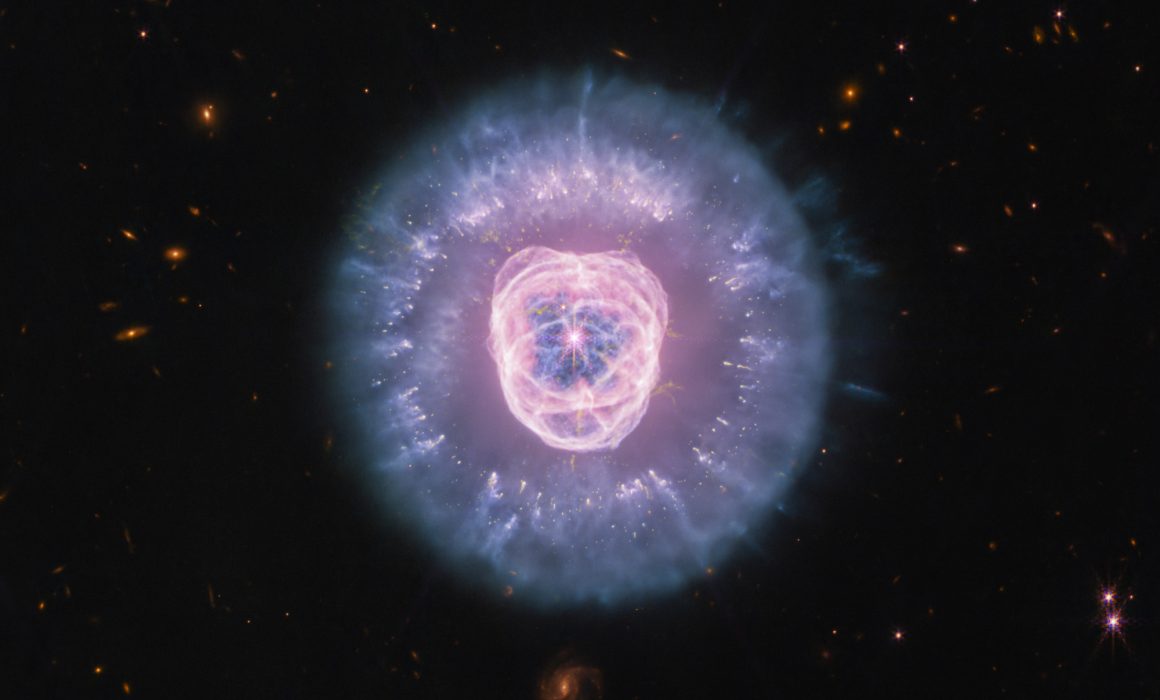
NASA’s James Webb Space Telescope used its Near Infrared Camera and Mid-Infrared Instrument to capture striking new details of NGC 2392, known as the Lion Nebula, located in the constellation Gemini. Webb’s infrared vision pierces through cosmic dust to reveal glowing ionized gas bubbles expanding around a super-hot central white dwarf star. The image exposes dense, compact dust clumps forming the lion’s mane that act as miniature shields against intense radiation, freezing a turbulent evolutionary process in time before the nebula disperses over the next 10,000 years.
Image Credit: NASA, ESA, CSA, STScI; Image Processing: Alyssa Pagan (STScI)


Sign Up for The Launch
The Launch is a weekly email from Dr. Chris and his team. It’s full of retirement tips, news, listener questions & more, straight from us to your inbox. Get smarter about retirement in just 5 minutes every week. Let’s go!
Episode Resources
Episode Transcript
Introduction
Dr. Chris Mullis, PhD, CFP®: When you see news headlines claiming you’ll need nearly four hundred thousand dollars just to stay healthy in retirement, it’s easy to feel like your financial plan could be on a crash course. But what if that giant number is actually missing the real-world picture of how cash flow actually works?
Are you ready?
NASA: 3, 2, 1, 0 and lift off. Lift fell Americans return to space as discovery clears the tower.
Dr. Chris Mullis, PhD, CFP®: Welcome back to Retirement Isn’t Rocket Science, . This is episode 24, and I’m your host, Dr. Chris Mullis. I’m a practicing retirement planner with 21 years of experience and the founder of Northstar Capital Advisors, a retirement and tax planning firm.
I spent my first career as an astrophysicist using NASA’s great space observatories and giant telescopes in Hawaii and Chile to map the outer edges of the universe. Today, as a certified financial planner, I’m helping you navigate a different kind of frontier.
That’s your retirement. Before we dive into today’s show, I need to ask a big favor. We’re on a mission here to help a million people worry less and retire more. Please take a moment right now and share the podcast with a friend or a family member who you think could benefit from it. I deeply appreciate your support.
Now, on with the show
In today’s show, are big healthcare headlines keeping you from launching your retirement? And should you take a new mortgage in retirement? Why the math and mindset both point to the same answer. And the lion roars in infrared. NASA’s Webb Space Telescope unveils stunning new details in Gemini
Retirement Briefing Room
Dr. Chris Mullis, PhD, CFP®: Welcome to the Retirement Briefing Room. This is where we huddle up to take a close look at important aspects of your financial life, spotlight pathways of success, and think about how to integrate these into your retirement mission plan. Today, we are diving into a major financial report that’s making the rounds across the news outlets, causing flashing headlines like Retiree Healthcare Costs Spike 7.5%, and causing a lot of heartburn for folks gearing up for retirement.
Fidelity’s latest annual benchmark report on medical spending for retirees reveals that lifetime medical costs for a 65-year-old retiring in 2026 have jumped by 7.5%. According to Fidelity, the average single retiree will need around $185,500, while a retired couple will need a staggering $371,000 to cover medical expenses throughout retirement
When numbers like three hundred and seventy-one thousand get thrown around, it’s easy to freeze up. It sounds like a massive lump sum you need sitting in cash on day one of retirement. But as a former rocket scientist and longtime retirement planner, I can tell you, looking at a single cumulative number without context is like measuring total rocket fuel consumption on a multi-year mission all at once.
It sounds overwhelming until you realize fuel is burned steadily over time, stage by stage. Experienced retirement planners across this country look at reports like this with a very healthy dose of skepticism. I call big number figures like this financial media noise or financial media scare tactics.
They’re designed to generate headlines and provoke anxiety rather than help you make practical, fact-based decisions. Imagine if financial media published headlines declaring, “Average retired couple will need one point two million dollars for food over a thirty-year retirement.” If you saw that headline, you might panic and think you can’t afford to eat.
But no one buys thirty years of groceries on day one of retirement. You buy them week by week within your monthly budget. Healthcare works exactly the same way. I believe another healthy lens is breaking down these scary numbers into real-world cash flow.
If you take that one hundred and eighty-five thousand five hundred dollars an individual needs and spread it over a typical twenty-five-year retirement, that’s three hundred months. It breaks down to roughly six hundred and eighteen dollars per month per person for healthcare. While six hundred and eighteen dollars a month isn’t pocket change, it’s an operational, manageable monthly line item, not an insurmountable mountain.
You can think of these expenses as part of your spending floor, your predictable, recurring, essential costs. Your monthly Medicare Part B, Part D, and Medigap or Medicare Advantage premiums are just standard operational expenses right alongside your electric bill, your groceries, and your property taxes.
When you treat healthcare as an ongoing monthly line item, the headline loses its power to scare you, and that fear has real consequences. Like the one more year syndrome I sometimes hear from prospective clients or brand new clients. When pre-retirees see a three hundred and seventy-one thousand dollar healthcare price tag, they get spooked into staying into their nine-to-five grind longer than necessary. In doing so, they sacrifice their most active, healthy, early retirement years, their go-go years, to protect against a theoretical cumulative number decades down the road.
Now, while we shouldn’t panic, we also shouldn’t ignore healthcare. Let’s examine a few critical ways healthcare differs from regular expenses. First, let’s look at the tax and IRMAA trap. You may recall , IRMAA stands for Income Related Monthly Adjustment Amount. Those are Medicare surcharges. Now, unlike groceries, your healthcare costs in retirement are directly tied to your tax return.
If your modified adjusted gross income crosses certain thresholds, often due to required minimum distributions or unmanaged Roth conversions, you trigger IRMAA surcharges, which instantly inflate your Medicare premiums. Smart tax management keeps those premiums low. Second, there’s nonlinear inflation.
healthcare costs can spike unexpectedly due to deductibles or co-pays. That’s why you need a dedicated cash liquidity buffer to handle those out-of-pocket shocks. Third, the long-term care gap. Fidelity’s estimate specifically excludes long-term custodial care, such as nursing homes or assisted living.
Long-term care is a distinct risk that requires its own strategy, whether that’s self-funding reserves or hybrid insurance, rather than mixing it up with routine medical bills. To summarize our key takeaways from today’s briefing. Number one, ignore the headline shock. Don’t let aggregate thirty-year totals scare you. Retirement health care is paid monthly, averaging around six hundred to seven hundred dollars per person per month. Number two, integrate costs into your monthly cash flow.
Treat Medicare premiums as a standard part of your baseline budget, and keep a liquid buffer for deductibles. Number three, watch the tax signals. Plan your income and your portfolio distributions carefully to avoid triggering costly IRMAA surcharges on your Medicare premiums. And number four, separate routine health from long-term care.
Build a specific strategy for custodial long-term care rather than conflating it with day-to-day medical costs. Retirement planning isn’t about solving every thirty-year expense variable on day one. It’s about having an adaptive , tax-efficient cash flow strategy that lets you ignore the media noise and enjoy the journey.
You’ll find a link to Fidelity’s report in the show notes in our weekly newsletter. Now, let’s head over to mission control to answer your questions and get you retirement ready
Ask Mission Control
Dr. Chris Mullis, PhD, CFP®: Discovery Houston, 20 seconds to LOS. Tres Hothead. Nice to be in orbit.
Welcome to Ask Mission Control. Is taking out a 30-year mortgage in your retirement a clever wealth strategy, or is it a trajectory heading straight for a cash flow trap? Today, we run the math on paying cash versus borrowing in retirement. That’s where this week’s question takes us. It comes from John, and John writes, “My wife and I are in our early eighties, and we’re in pretty good shape.
We’re planning to sell our two-story house with a basement that’s worth approximately five hundred thousand dollars and buy a condo in town that will probably cost about five hundred dollars as well. That new condo will be much smaller than our existing home, a single-story structure, and in a fifty-five-plus community close to our doctors.
My question is, should we buy the new condo with cash or put twenty percent down and take out a mortgage for the rest? In case it’s helpful, we have about one point one million dollars in a brokerage account, plus about a hundred and fifty thousand dollars in traditional IRAs.
Our Social Security income is about five thousand dollars per month between the two of us, and we have a small pension, three hundred dollars per month. I think our portfolio return’s about seven percent over the long term, and if I understand it right, the thirty-year mortgage rate is currently about six point six percent.”
John, first off, thanks for the very detailed question, and congratulations to you and your wife. Transitioning to a single-story condo in a fifty-five plus community near your healthcare providers is a super smart, proactive move for this chapter of life. Now onto your question:
should you leverage a mortgage or pay a hundred percent cash? In the retirement planning world, we often debate math versus mindset. But in your case, both the numbers and your peace of mind are pulling in the same direction. The bottom line recommendation is crystal clear: Pay cash for that condo. Let’s break down why this is a clear-cut decision, starting with the spreadsheet math. On paper, keeping your money invested at seven percent while taking out a mortgage at six point six percent looks like you’re coming out ahead by a pretty tiny margin, about point four percent. But in financial planning, taxes act like gravity. When you earn seven percent on a taxable brokerage account, you owe taxes on dividends and capital gains.
Assuming a modest fifteen percent tax rate, your net investment returns drop from seven percent down to something closer to, say, probably six percent. Meanwhile, that six point six percent mortgage rate is a fixed non-deductible expense. Because standard deductions for a married couple over sixty-five are so high, itemizing mortgage interest rarely makes sense.
So borrowing at six point six percent to net about six percent on your investment creates what we call a negative arbitrage. You’re effectively paying maybe one percent a year for the privilege of holding that debt. Here’s how that translates to real dollars. If you put down twenty percent, that’s a hundred thousand dollars, and take out a four hundred thousand dollar mortgage, your monthly principal and interest payments will be roughly, let’s call it two thousand five hundred and sixty dollars a month.
If you keep that extra four hundred thousand dollars in your investment portfolio at an after-tax rate of six percent, it generates, let’s call it about one thousand nine hundred and eighty-five dollars a month on a net income basis.
That means taking out the mortgage costs you about five hundred and seventy-five dollars every single month. That’s out of pocket. So that approach again is costing you an extra five hundred and seventy-five dollars a month. So beyond that negative arbitrage, let’s look at your monthly cash flow.
You and your wife enjoy about fifty-three hundred dollars per month in guaranteed fixed income. That’s five thousand dollars from Social Security plus three hundred in pension. Without a mortgage, that fifty-three hundred dollars is completely unencumbered. It’s comfortably covering your living expenses, condo HOA fees, and property taxes, leaving plenty of breathing room for health care and travel.
Now, if you take out a mortgage, that two thousand five hundred and sixty dollars of monthly payments gobbles up close to half of your entire guaranteed monthly income. That leaves you with just about two thousand seven hundred and fifty dollars a month before paying condo fees, medical care, and groceries.
In your eighties, health care expenses tend to rise, and locking up half your income in debt service adds unnecessary financial stress.
As retirement advisors, we often warn clients against paying cash for a house if it requires pulling large sums out of a traditional IRA. A five hundred thousand dollar pre-tax withdrawal in a single year can trigger a massive tax bomb, pushing you into higher tax brackets and spiking your Medicare premiums.
Again, those IRMAA surcharges. Pivoting back to John’s particular situation, John doesn’t need to touch his IRA, right? You’re selling a five hundred thousand dollar home to buy a five hundred thousand dollar condo. The proceeds from your home sale cover the purchase dollar for dollar of your new home.
So your one point one million dollar brokerage account stays fully intact as a liquid safety net, and your hundred and fifty thousand dollar IRA remains untouched. You get total debt freedom without a single tax penalty
There’s a couple moving parts here, but at the end of the day, here’s how I would summarize this. Number one, John, look out for that negative arbitrage. After taxes, borrowing at six point six percent to earn seven percent costs you about five hundred and seventy-five dollars a month out of pocket.
Number two, protected cash flow. Paying cash keeps a hundred percent of your fifty-three hundred dollars of monthly income. That’s guaranteed monthly income ’cause John and his wife also have access to portfolio distributions, right? So paying cash keeps that guaranteed monthly ,income free … for lifestyle and healthcare.
And number three, no tax drag. Funding the condo through your home sale proceeds avoids triggering IRA tax brackets or Medicare surcharges. And finally, number four, you preserve liquidity.
Your one point four million dollar brokerage cushion remains fully intact for complete peace of mind. Taking out a thirty-year loan in your early eighties means holding debt into your hundred and tens. Why deal with bank paperwork, monthly bills, and market risk when you can just own the home outright? I hope that’s helpful, John.
Thank you so much for the question. And again, congratulations on that smart move to create a safe environment for you to continue to enjoy retirement with your wife. If you’ve got a retirement question that you’d like us to answer on the show, head over to retirementisntrocketscience.com and click ask a question. Or even better, you can skip to the front of the line by calling mission control at seven zero four two three four six five five zero and record your audio question.
Now, let’s learn how new JWST images reveal the Lion Nebula in all its glory
NASA: In Discovery Houston, we’ve got a good picture of Steve.
Retirement Big Picture
Dr. Chris Mullis, PhD, CFP®: What happens when a star reaches the end of its main career? It doesn’t just fade quietly into the dark. It launches into a breathtaking, colorful new chapter that lights up the entire cosmic neighborhood
It’s time to step back, look up, and launch into this week’s retirement big picture. Before I was helping people navigate their retirement flight plans, I spent nearly two decades as an observational astronomer staring deep into the cosmos. Decoding the stars is in my DNA, and nothing puts market noise into perspective quite like the scale of the universe.
So let’s expand our horizons and explore the skies together
Today, we are setting our sights on a stunning cosmic spectacle known to astronomers as NGC 2392, or more affectionately, the Lion Nebula. So how did this celestial marvel first come to our attention? It was discovered back in January 1787 by the famed astronomer Sir William Herschel.
Using a large custom-built reflecting telescope in England, Herschel spotted a glowing disk with a bright central point. Over time, as telescopes improved, observers noticed that its intricate gas shells resembled a face surrounded by a majestic shaggy mane, giving rise to the popular nickname the Lion Nebula.
If you’re looking to spot the Lion yourself, you’ll need to look towards the constellation Gemini, the Twins. For those of us living in the United States and across the northern hemisphere, Gemini is a prominent winter constellation, easily visible riding high across the night skies from December straight through April.
Can you see it from your back deck? If you’re an amateur astronomer with a modest four or eight-inch backyard telescope, absolutely. Through a smaller lens, NGC 2392 appears as a bright bluish-green disk. Stargazers often call it the blinking nebula, and viewing it takes advantage of a fascinating trick of human visual biology
When you use direct vision, looking straight at the central star, light lands on the center of your retina, an area packed with cones. Cones are magnificent for daylight, sharp details, and rich colors, but they struggle with faint, dim light. However, if you shift your gaze slightly off center, a technique backyard astronomers call averted vision, the light falls on the outer edges of your retina, which are populated by rods.
Rods are colorblind, but they are exceptionally sensitive to low light. So when you look just off to the side, your rods kick in, and the delicate, ghostly glow of the surrounding nebula suddenly pops into view as if by magic. For professional astronomers using massive ground-based observatories, such as the W.
- Keck Observatory in Hawaii or the Very Large Telescope in Chile, advanced lasers and adaptive optics allow them to cut through Earth’s atmospheric blur to study the nebula’s complex chemical recipe in detail. However, to get a truly pristine view, we have to travel above Earth’s atmosphere. Back in the year two thousand, NASA’s Hubble Space Telescope captured a famous visible light image of the nebula
revealing comet-shaped streamers forming that famous mane of the lion. Fast-forward to today, NASA’s flagship observatory, the James Webb Space Telescope, JWST, has turned its super sensitive infrared eyes towards the Lion. Equipped with both its Near Infrared Camera, NIRCam, and Mid-Infrared Instrument, MIRI, Webb delivered a remarkable new view of this stellar landscape.
While Hubble showed us the visible gas, Webb’s infrared vision pierces right through the cosmic dust to highlight compact dust clumps and glowing ionized gas haze. At the very center of the Lion’s Nebula sits the remnant of a dying star, now a super hot white dwarf
think of this white dwarf as cooking the surrounding space from the inside out, blowing a massive bubble of ionized gas that expands and reshapes the dusty environment around it. Webb’s new imagery reveals that the tufts of hair in the lion’s mane are actually dense, compact clumps of dust that have managed to survive the central star’s intense radiation acting like miniature shields for the gas trailing behind it. Webb effectively freezes this turbulent evolutionary process in time. Astronomers estimate that over the next ten thousand years, which is a mere blink of an eye in cosmic time, during those ten thousand years, the gas and dust will fully disperse into interstellar space.
It’s a wonderful reminder of the beauty found in life’s great transitions. When a star finishes its primary phase, it doesn’t simply disappear. It gracefully sheds its outer layers to create a gorgeous, lasting legacy that enriches the galaxy for generations to come.
You’ll find the JWST image of the lion in this week’s newsletter called The Launch. If you haven’t already joined the crew, you can sign up for the launch at retirementisntrocketscience.com.
Conclusion & Action Items
Dr. Chris Mullis, PhD, CFP®: That’s all for today’s mission. Before you hit the ground running, here’s your mission checklist for the week. Number one, audit your base healthcare cash flow. Calculate your estimated monthly Medicare premiums, Part B, Part D, and supplemental, and add them directly into your recurring monthly spending floor rather than worrying about lump sum estimates
Number two, establish a dedicated liquidity buffer. Set aside one or two years of maximum out-of-pocket deductible expenses in a liquid savings account, or a properly structured war chest to absorb unexpected medical shocks without disrupting your long-term portfolio. And number three, review your tax trajectory for IRMAA, income related monthly adjustment amounts, or in plain English, higher Medicare premiums.
Work with a certified financial planner to model future distribution strategies and Roth conversions, ensuring you don’t accidentally cross income thresholds that increase your Medicare premiums. Remember, building a stress-free future doesn’t require a degree in orbital mechanics, just a solid flight plan and a steady execution.
If today’s episode helped clear your airspace, hit subscribe, leave us a review, and share it with someone whose financial trajectory needs a boost. For full episode notes, the JWST image of the Lion Nebula, and extra resources, head over to retirementisntrocketscience.com.
Until next time, keep your strategy clear, your stress low, and remember, retirement isn’t rocket science. Mission Control out.
Credits
Dr. Chris Mullis, PhD, CFP®: We thank the National Aeronautics and Space Administration for providing the radio communications between the space shuttle astronauts and the flight controllers.
Disclaimer
This show is for informational and entertainment purposes only. It is not specific tax, legal, or investment advice. Before considering acting on anything you hear in this show, first consult with your own tax, legal, or financial advisor