

7 Retirement Myths Exposed
Are sensational Social Security headlines and fear-driven retirement myths causing you to second-guess your retirement readiness? In this episode, Dr. Chris Mullis, PhD, CFP® dismantles seven common planning misconceptions, reveals how to avoid a massive tax bomb on Health Savings Accounts, and explores NASA’s groundbreaking wide-angle space observatory. Tune in to learn how taking a data-driven, panoramic view of your wealth can replace panic with peace of mind and maximize your retirement freedom.
Retirement Big Picture
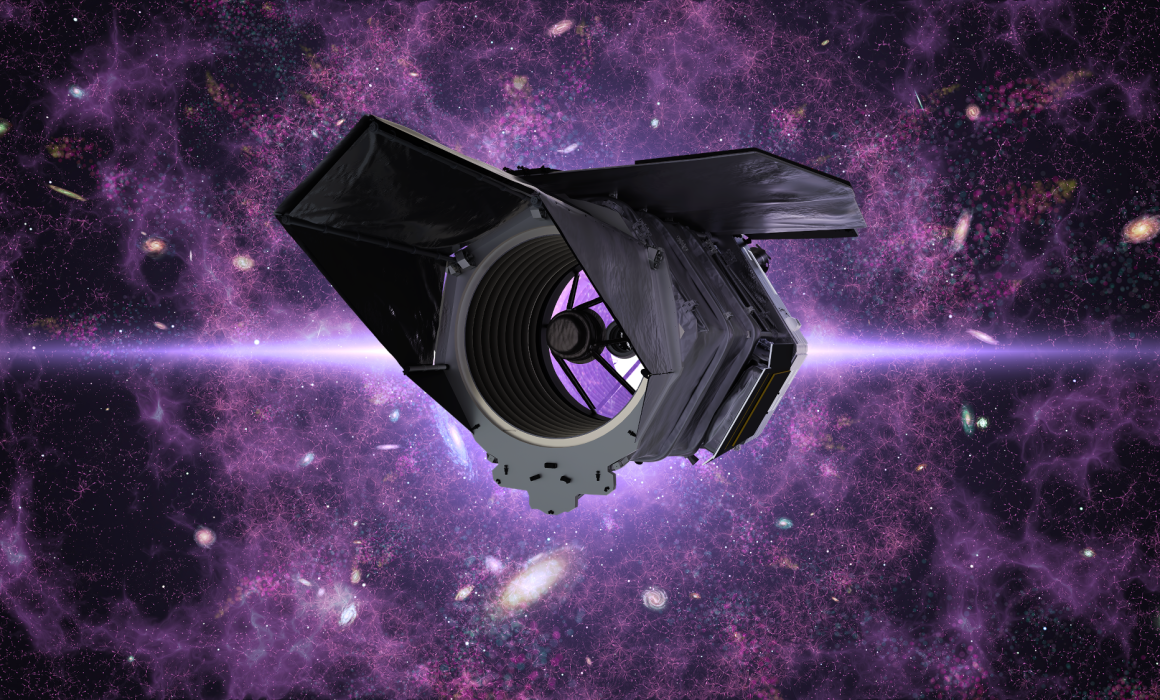
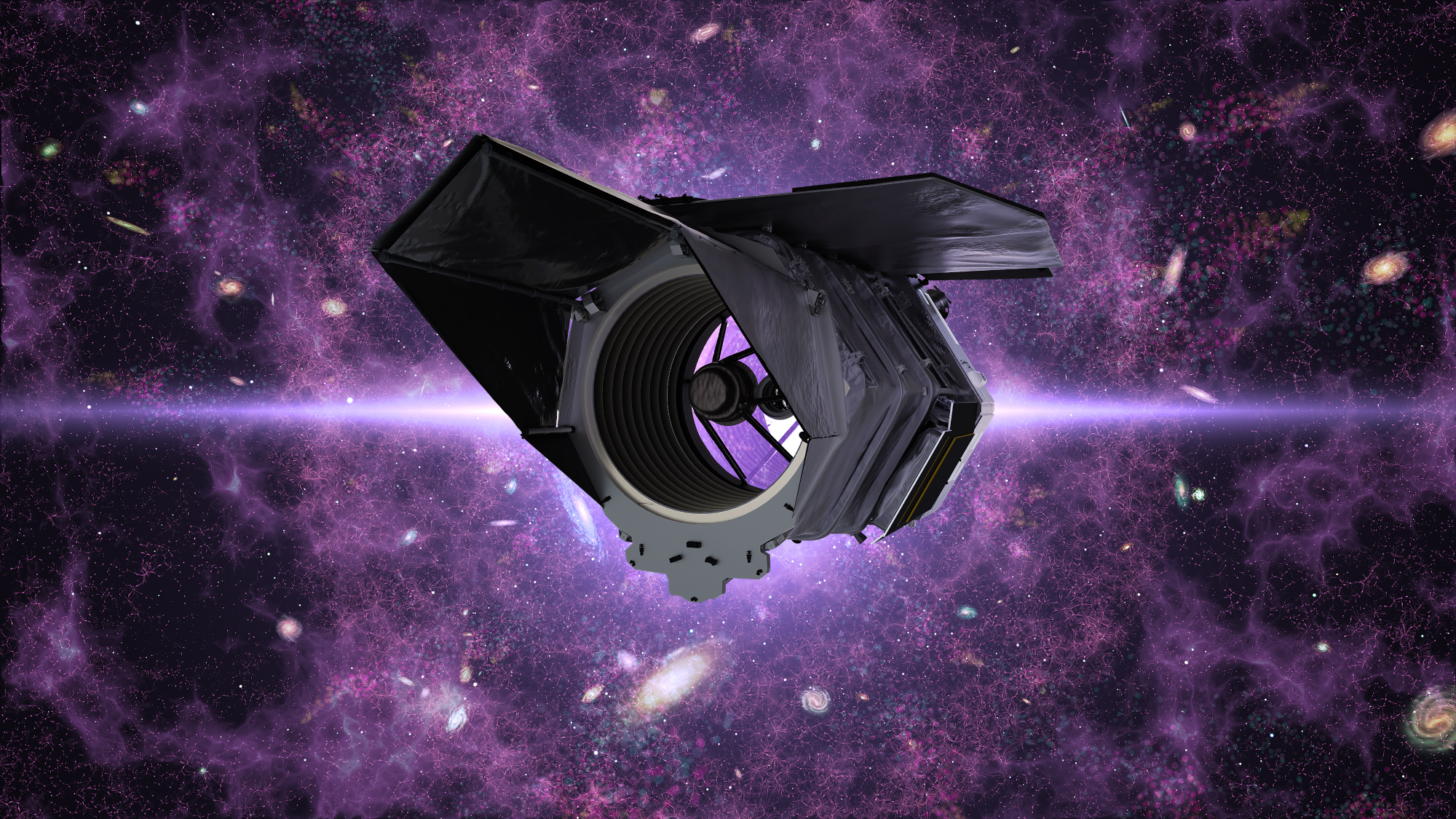
NASA’s newly launched Nancy Grace Roman Space Telescope travels one million miles out to the L2 Lagrange point, featuring an eight-foot primary mirror with a field of view 100 times larger than Hubble’s. Equipped with advanced coronagraph optics and a high-resolution wide-angle camera, the observatory captures full-moon-sized swaths of deep space to study dark matter, dark energy, and over 100,000 exoplanets. Downlinking 1.4 terabytes of panoramic data daily, this flagship mission surveys vast cosmic regions to pinpoint rare phenomena and work in tandem with the Webb and Hubble telescopes.
Image Credit: NASA

Sign Up for The Launch
The Launch is a weekly email from Dr. Chris and his team. It’s full of retirement tips, news, listener questions & more, straight from us to your inbox. Get smarter about retirement in just 5 minutes every week. Let’s go!
Episode Resources
- Seven Common Misconceptions About Retirement Planning — Center for Retirement Research at Boston College
Episode Transcript
Introduction
Dr. Chris Mullis, PhD, CFP®: Are scary Social Security headlines and arbitrary savings targets making you second-guess your retirement readiness? It’s far too easy for anxiety to trigger fear-based decisions and leave you unnecessarily worried about losing your benefits or outliving your money. Today, we’re breaking down seven common retirement planning myths so you can clear away the noise and step into your next chapter with confidence.
Are you ready?
NASA: 3, 2, 1, 0 and lift off. Lift fell Americans return to space as discovery clears the tower.
Dr. Chris Mullis, PhD, CFP®: Welcome back to Retirement Isn’t Rocket Science. I’m your host, Dr. Chris Mullis. I’m a practicing retirement planner with 21 years of experience and the founder of NorthStar Capital Advisors, a retirement and tax planning firm. You can check us out at retirenorth.com. I spent my first career as an astrophysicist using NASA’s great space observatories and giant telescopes in Hawaii and Chile to map the outer edges of the universe.
Today, as a certified financial planner, I’m helping you navigate a different kind of frontier that’s no less important. That’s your retirement. Episode 25 begins now.
In today’s show, are you planning your retirement based on real data or fear-based myths? And defusing the health savings account tax trap. How and when to launch your health savings drawdown. And finally, the wide-angle universe. NASA’s brand-new Nancy Roman Space Telescope, and the power of panoramic planning
Retirement Briefing Room
Dr. Chris Mullis, PhD, CFP®: Welcome to the Retirement Briefing Room. This is where we break down key financial moves, spotlight proven wins, and build a mission plan that puts your retirement on autopilot. Today we’re diving into a standout article titled “Seven Common Misconceptions About Retirement Planning ,” written by Luke Dellorn and recently published by the Center for Retirement Research at Boston College.
Aerospace engineers have a simple rule: Never navigate by ghost signals. If an instrument panel gives a false reading, you don’t panic and flip the dump valves. You verify the data, check your trajectory, and execute a planned course correction. In retirement planning, fear acts like a ghost signal.
The Center for Retirement Research article highlights how common misconceptions cluster around fear. Fear of running out of money, fear of benefit cuts, or fear of making a wrong turn. When you let fear guide your flight plan, you end up making reactionary, defensive decisions like living on far less than you earned, hoarding cash, or missing out on the best years of your retirement life.
Let’s break down the seven misconceptions, analyze how we approach them in my retirement planning firm, and map out how to adjust your mission parameters
Misconception number one, Social Security won’t be there for me. The article opens with a story about a seventy-one-year-old retiree terrified by headlines that Social Security will run out in twenty thirty-two. She was convinced her entire safety net was about to vanish. But here’s the actual data.
Even if Congress does absolutely nothing by twenty thirty-two, incoming payroll taxes will still cover approximately eighty percent of scheduled benefits. The absolute worst case scenario without legislative action is a twenty percent cut, not a complete shutdown.
And historically, Congress steps in long before that happens. At my retirement planning firm, we often highlight that panic claiming Social Security early based on apocalyptic headlines is one of the biggest mistakes a diligent saver can make.
You cannot control political theater or media noise, but you can control your process. Rather than assuming zero benefits, we stress test your plan against a modest benefit reduction, so your financial orbit remains entirely stable no matter what happens in Washington. Misconception number two and number three, I’ll just stay in my home, and Medicaid will pay for my care.
When it comes to healthcare and long-term care, many retirees rely on hope rather than a plan. Saying, “We’ll just stay in our house,” is a preference, not a strategy. The Center for Retirement Research article notes that about eighty percent of retirees will require long-term care.
Median home healthcare costs around seventy-five thousand dollars per year, and less than five percent of adults over fifty carry private long-term care insurance. When care needs escalate beyond what home care can handle, many assume Medicaid will step in to cushion the fall. But Medicaid is a safety net with very strict criteria.
In many states, single applicants cannot hold more than two thousand dollars in countable assets to qualify. And giving away your life savings just to qualify for Medicaid leaves you financially vulnerable and severely restricts your choice of care facilities. Housing and healthcare coordination are among the biggest unaddressed risks to financial independence.
In fact, long-term care is a massive blind spot for do-it-yourself retirement planners. A real mission plan accounts for late-life care explicitly, whether through dedicated self-insurance reserves, hybrid insurance policies, or a home equity strategy, so your spouse and your loved ones aren’t left stranded.
Misconception number four: I’m retired, so long-term investing doesn’t apply to me. When people enter retirement at age sixty-five, plus or minus, they often think short-term. But your retirement plan isn’t a brief hop. It’s a twenty-five to thirty-year journey. A dollar you plan to spend at age eighty-five needs twenty years of growth to fight off the erosion of purchasing power caused by inflation.
Retreating entirely into cash or short-term treasuries, sometimes called the T-bill and chill trap, may feel safe today, but it exposes your portfolio to severe purchasing power decay over time.
In my retirement planning work with clients, we balance long-term equity growth with short-term stability by pairing a globally diversified stock portfolio with a dedicated two to three-year short-term liquidity buffer, something we call the war chest. This short-term cash buffer absorbs market swings and pays your monthly living expenses, giving your long-term equities the multi-year runway they need to recover and grow without being prematurely liquidated.
Moving forward to misconceptions number five and number seven: I shouldn’t touch my principal, and I need a magic number before I can retire. Decades of being a diligent saver often creates frugality inertia. People spend forty years accumulating capital, and the thought of drawing down principal triggers real, deep anxiety.
They try to live exclusively on bond yields or stock dividends. But dividend yields on major stock indices are far lower than in decades past, making income-only spending impractical for most. Your nest egg is not an untouchable monument. It is fuel designed to power your retirement life. A sustainable total return withdrawal rate between three point five percent and sometimes in excess of five percent allows you to systematically consume principal without burning through your capital prematurely.
Furthermore, arbitrary retirement savings goals like, “I need a million dollars,” or, “I need three million dollars before I can retire,” these are absolutely meaningless in isolation.
If you spend $50,000 a year and have $30,000 coming from Social Security and pensions, your portfolio needs are modest. If you
spend $150,000 a year, that target changes dramatically. And remember, research shows that retiree spending isn’t linear. It often follows a spending smile, peaking during the early active go-go years and naturally slowing down later.
Utilizing dynamic withdrawal frameworks like Guyton-Klinger guardrails gives you explicit permission to spend more money early in retirement when you have both the health and the energy to enjoy it
Misconception number six: My taxes will be lower in retirement. Assuming taxes automatically plunge when you stop working is a frequent tactical error. If you have built a healthy nest egg in traditional tax-deferred 401s and IRAs, every dollar withdrawn is taxed as ordinary income. When you stack required minimum distributions, RMDs, on top of Social Security and pension income, you can easily end up in a higher tax bracket than you expected. At my retirement firm, we emphasize leveraging the gap years, that golden window between retirement date and the start of RMDs or Social Security.
During these low-income years, executing systematic Roth conversions allows you to pay taxes at today’s lower rates, unlocking tax-free growth and tax-free distributions down the road. However, you must monitor Medicare IRMA surcharge thresholds and withdrawal rules so you don’t inadvertently trigger unnecessary premiums. To summarize our key flight parameters from this discussion.
First, ignore sensational media narratives about Social Security failing. Focus on the controllable process instead of the headlines. Second, replace long-term care assumptions and hopes with explicit housing and care strategies rather than relying on Medicaid or simply sheer luck.
Third, maintain an equity allocation for long-term purchasing power backed by a multi-year cash payroll reserve to guard against market downturns. Number four, treat your portfolio as fuel using dynamic guardrails so you can spend principal confidently during your healthiest years. And finally, take advantage of tax gap years through strategic Roth conversions before RMDs kick in.
You’ll find a link to the Seven Common Misconceptions about Retirement Planning article in the show notes and in our weekly newsletter called The Launch. Now, let’s head over to Mission Control to answer your financial questions and get you retirement ready
Ask Mission Control
Dr. Chris Mullis, PhD, CFP®: Discovery Houston, 20 seconds to LOS. Tres Hothead. Nice to be in orbit.
Welcome to Ask Mission Control. This week’s question comes from Jeannie. Jeannie writes in saying she and her husband are both sixty-five with three adult children and a health savings account, an HSA, that’s grown to over a hundred and fifty thousand dollars. She’s been using her HSA as a stealth IRA for years, maxing out her annual contributions , investing for long-term growth, and saving a shoebox full of medical receipts for future distributions from the account.
But now she’s heard that HSAs are terrible assets to inherit and wants to know, is that true? And if so, when should she start spending down her HSA? First off, Jeannie, stellar job on building that big balance. Using an HSA as a stealth IRA during your working years is an absolute masterclass in wealth accumulation because of its unmatched triple tax savings.
You have a tax deduction on your contributions to the HSA, the growth within the HSA is tax-deferred, and distributions in retirement for healthcare costs are tax-free. This is the only triple tax savings account in the US tax code. But to answer your first question directly, Jeannie, yes, it is true that an HSA can be an absolute tax nightmare to inherit for anyone other than your spouse.
Think of an HSA like a spacecraft’s thermal heat shield. While you and your spouse are in the cockpit together, it provides complete protection. If you pass away and leave the HSA to your husband, it transfers completely tax-free and becomes his own HSA. However, if the HSA passes to a non-spouse beneficiary, like your three adult children, that thermal shield disappears instantly.
The entire one hundred and fifty thousand dollars loses its HSA status and becomes one hundred percent taxable ordinary income to your kids in a single calendar year. If your adult kids are in their peak earning years, inheriting fifty thousand dollars each in one lump sum could push them right into a much higher tax bracket, triggering an unintended tax bomb.
That brings us to your second question: When should you start spending it? The short answer is right now. At age sixty-five, you’ve hit the ultimate launchpad window. Since you’ve already reached this age, here’s how a financial planner looks at your flight plan for spending down that one hundred and fifty thousand dollar balance in a very tax-efficient manner.
First, cash in those archived receipts. You mentioned saving your medical receipts for years. This is what planners call the shoebox strategy or delayed reimbursement. The IRS sets no deadline or expiration date on when you have to reimburse yourself for past out-of-pocket medical expenses, so you can start saving those from the day you opened your first HSA.
So if you have twenty thousand or thirty thousand in saved receipts from past years, you can withdraw that exact amount from your HSA tax-free today for a dynamic trip around the world, a home remodel, or extra cash flow. Because qualified HSA withdrawals do not count towards your modified adjusted gross income, that’s your MAGI, you get tax-free cash without driving up your tax brackets or triggering higher Medicare IRMAA surcharges on your Part B and Part D premiums Second, pay recurring healthcare and Medicare costs directly.
Starting at age sixty-five, you can use your HSA fund tax-free to pay for Medicare Part B, Medicare Part D, and Medicare Advantage premiums, as well as qualified long-term care insurance premiums. Just keep in mind that standard Medigap supplemental policy premiums do not qualify.
Paying Medicare premiums directly from your HSA creates a smooth tax-free paycheck for health expenses that replaces taxable traditional IRA withdrawals. Third, prioritize HSA spend down over Roth IRAs. In your estate planning hierarchy, your HSA should move to the very top of your spend down list ahead of your Roth IRAs and traditional IRAs.
Under current tax rules, your kids can inherit a Roth IRA completely tax-free and let it grow for another ten years. They can also stretch traditional IRA distributions over ten years. But an inherited HSA hits them with all taxes on day one.
By spending down your HSA first to cover your healthcare and living expenses in retirement, you preserve those far more tax-friendly Roth and traditional IRAs for your children. And fourth, utilize post sixty-five flexibility. Even if you eventually exhaust your medical receipts or medical expenses, once you reach sixty-five, the twenty percent penalty for non-medical HSA distributions disappears.
Any non-medical withdrawals are simply taxes ordinary income, just like a traditional IRA, but with no required minimum distributions forcing your hand. So to recap our mission briefing today, Jeanie, yes, HSAs are terrible for non-spouse heirs because of the entire balance becoming taxable income in a single year.
Age sixty-five is your ideal green light to transition from accumulating to spending down your HSA. Start pulling tax-free cash by reimbursing yourself for past saved receipts. Use HSA dollars to pay Medicare Part B and Part D premiums tax-free, and prioritize spending HSA dollars before your Roth IRAs, so you leave your adult children tax-advantaged inheritances rather than a single year tax shock. Jeannie, thanks for your excellent HSA questions. HSAs are my favorite account type, so your question is a big hit in my universe.
If you’ve got a retirement question that you’d like us to answer on the show, head over to retirementisntrocketscience.com and click ask a question. Or even better, you can skip to the front of the line by calling mission control at seven zero four two three four six five five zero and record your audio question.
Now, let’s head over to NASA’s brand new flagship mission and explore why taking a wide angle view is essential for mapping the cosmos and securing your financial future
NASA: In Discovery Houston, we’ve got a good picture of Steve.
Retirement Big Picture
Dr. Chris Mullis, PhD, CFP®: Welcome to the Retirement Big Picture part of our show. This is where we look up and look out to expand our appreciation and understanding of our amazing universe. What if you could capture a picture of the deep universe 100 times the field of view of the Hubble Space Telescope without losing a single pixel of detail?
Today, we look at NASA’s brand-new flagship mission, the Nancy Grace Roman Space Telescope . During my 17 years in professional astronomy scanning the deep sky, I had the incredible privilege of using some of humanity’s most powerful eyes in the universe.
I conducted research using the sharp optical vision of the Hubble Space Telescope, explored high-energy cosmic environments with both the ROSAT X-ray Observatory and the Chandra X-ray Observatory, and peered through interstellar dust using the Spitzer Space Telescope. In fact, a distant galaxy cluster I helped discover back during my research career was actually featured as the very first image released by the James Webb Space Telescope.
Seeing those distant structures captured in breathtaking detail was an extraordinary moment for me. And speaking of groundbreaking space observatories, NASA just launched the next major flagship astrophysics mission.
That’s the Nancy Grace Roman Space Telescope that took flight on August 30th, 2026, aboard a SpaceX Falcon Heavy rocket from Kennedy Space Center.
This magnificent observatory is named in honor of Dr. Nancy Grace Roman, NASA’s first chief astronomer and the legendary visionary known as the Mother of Hubble. Dr. Roman championed space-based astronomy and drove the creation of NASA’s Great Observatories program, the very initiative that gave us Hubble, Chandra, and Spitzer the Nancy Grace Roman Space Telescope uses a 2.4-meter, that’s almost eight feet, as a primary mirror that was originally constructed for a classified US space satellite program. The mirror is the same size as the Hubble Space Telescope’s primary mirror but features a shorter focal length.
This optical design gives Roman the same crisp resolution of Hubble while enabling a field of view a hundred times larger. The Roman Space Telescope is traveling one million miles out into space to orbit at the same Sun-Earth Lagrange point, L2, the exact same gravitational sweet spot where the James Webb Space Telescope operates.
But while Webb acts like an ultra-powerful zoom lens for focusing on individual faint targets, Roman is designed to be astronomy’s ultimate high-resolution wide-angle camera.
So in just a single image, Roman can capture an area of the sky bigger than the full moon. Over its five-year primary mission, it will downlink a massive one point four terabytes of data back to Earth every single day This massive panoramic view allows scientists to tackle two of the grandest mysteries in physics: dark matter and dark energy.
Dark matter acts like an invisible ocean current guiding galaxy motion, while dark energy is the mysterious force accelerating the expansion of our universe. By mapping billions of distant galaxies and tens of thousands of exploding stars called Type One A supernovae, Roman will build a three-dimensional portrait of how cosmic structure has evolved over time.
On top of that, Roman will revolutionize our hunt for planets beyond our solar system, discovering over one hundred thousand exoplanets using light-bending gravitational microlensing and transit events. It also carries a cutting-edge coronagraph instrument, which uses flex mirrors to block out star glare so astronomers can directly image planets orbiting nearby stars’ invisible light. And what makes Roman’s work truly special is how it works in tandem with the other great observatories. It will survey vast swaths of the sky, pinpointing rare phenomena, so targeted observatories like Webb and Hubble can zoom in for detailed follow-up studies.
And you might have guessed it, there is a beautiful parallel here for retirement planning. When you’ve spent a lifetime working hard and accumulating a multi-million dollar nest egg, it’s easy to get bogged down looking through a microscope at daily market swings and maybe even individual stock choices.
But true financial peace of mind requires a Roman-style wide-angle perspective. You need to step back and look at your entire financial ecosystem, seeing how tax planning, Social Security timing, healthcare management, and investment strategy all fit together into one cohesive trajectory. When you have a clear panoramic view, you can navigate complex financial waters with absolute confidence
Conclusion & Action Items
Dr. Chris Mullis, PhD, CFP®: For full episode notes, a beautiful look at the Nancy Roman Space Telescope, and extra resources, head over to retirementisntrocketscience.com. Before you hit the ground running, here is your mission checklist for the week. Number one, establish a multi-year payroll reserve. Structure your cash flow so that short-term spending needs are insulated in safe liquid assets, keeping your long-term money growth-oriented in equities.
Number two, conduct a tax gap year audit. Review your tax trajectory between the start of retirement and age seventy-five to identify optimal windows for multi-year Roth conversions before required minimum distributions, RMDs, begin. And number three, formalize a long-term care blueprint. Document an explicit stress-tested plan for potential care needs that goes beyond relying on Medicaid or assuming you can remain unassisted in your home.
Retirement isn’t about solving a static thirty-year math equation or reacting to scary headlines. It’s about building an adaptive framework that gives you full agency, mitigates real risks, and allows you to spend your hard-earned money with complete confidence.
This is Dr. Chris reminding you that you are both the commander and the pilot of your retirement mission. Take control of your financial timeline today, because with smart planning, retirement isn’t rocket science.
Credits
Dr. Chris Mullis, PhD, CFP®: We thank the National Aeronautics and Space Administration for providing the radio communications between the space shuttle astronauts and the flight controllers.
Disclaimer
This show is for informational and entertainment purposes only. It is not specific tax, legal, or investment advice. Before considering acting on anything you hear in this show, first consult your own tax, legal, or financial advisor