


5 Smart Withdrawal Strategies to Boost Your Retirement Income
Are you letting a rigid, decades-old math rule prevent you from enjoying the “go-go” years you worked so hard to fund? Dr. Chris reveals how to safely boost your retirement income using dynamic guardrails and a strategic “war chest” to ensure you don’t reach age 85 with a mountain of unspent cash and a list of missed memories. We also tackle the “gravitational pull” of high-flying IPOs like SpaceX to help you decide if speculative boosters belong in your stable retirement orbit.
Retirement Big Picture
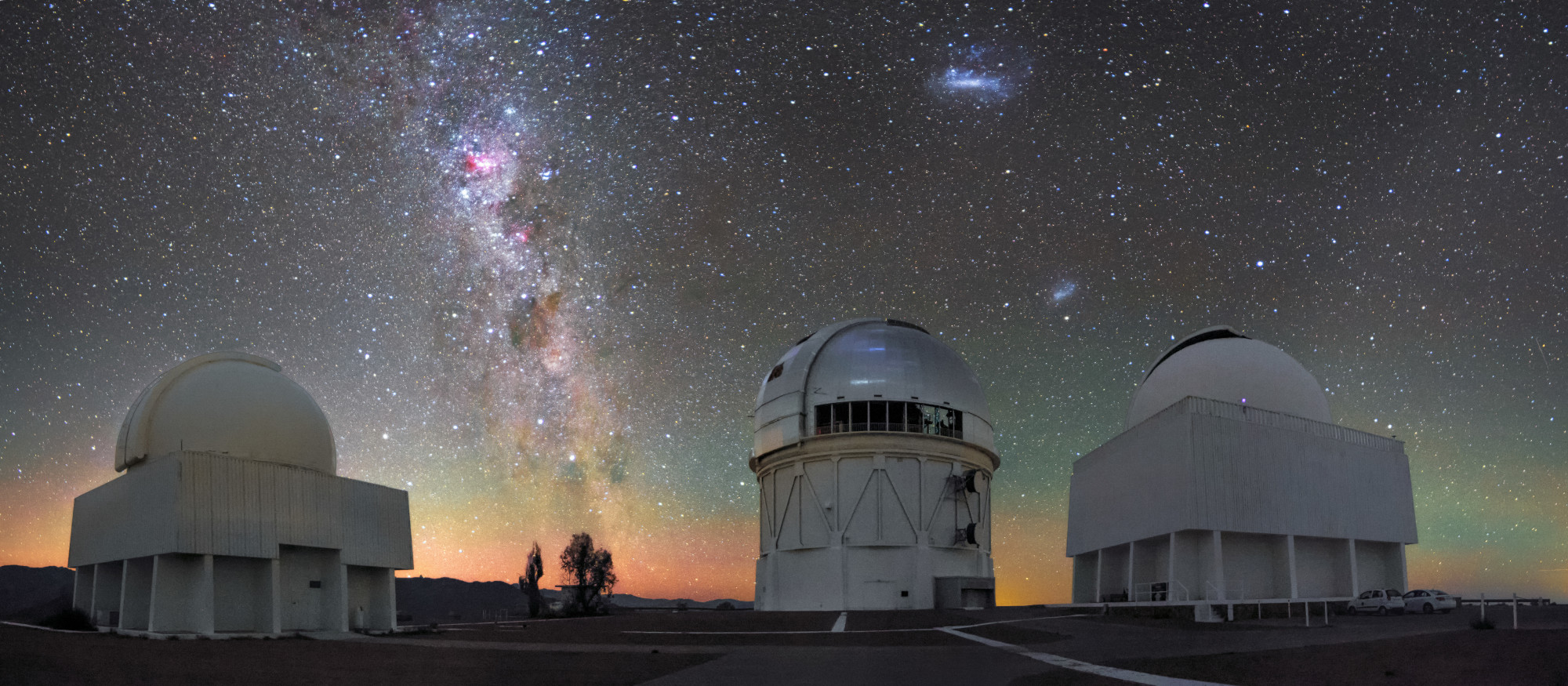
This segment highlights a breathtaking wide-field photograph from the Cerro Tololo Inter-American Observatory in Chile, showcasing the Milky Way stretching over the telescopes alongside the Large and Small Magellanic Clouds. These “satellite galaxies” appear as ethereal, misty ovals near the horizon, serving as ancient navigation markers that are exclusive to the Southern Hemisphere’s sky. The image captures the vibrant “airglow” of our atmosphere and the deep-space brilliance of the Tarantula Nebula, reminding us that even the most complex systems require the right vantage point to be fully understood.
Image Credit: CTIO/NSF NOIRLab/AURA/H. Stockebrand

Sign Up for The Launch
The Launch is a weekly email from Dr. Chris and his team. It’s full of retirement tips, news, listener questions & more, straight from us to your inbox. Get smarter about retirement in just 5 minutes every week. Let’s go!
Episode Resources
- The Best Strategies for Boosting Starting Withdrawal Rates in Retirement — Amy C. Arnott, CFA
Episode Transcript
Introduction
Dr. Chris Mullis, PhD, CFP®: Most retirees spend decades saving with one big fear in their mind running out of money. But what if I told you the biggest risk isn’t depleting your nest egg? It’s actually reaching age 85 and realizing you were too afraid to take the trips and make the memories you can no longer physically enjoy.
Today we’re breaking down the 4% rule and showing you how to safely front load your retirement fund. Are you ready?
NASA: 3, 2, 1, 0 and lift off. Lift fell Americans return to space as discovery clears the tower.
Dr. Chris Mullis, PhD, CFP®: Welcome back to Retirement Isn’t Rocket Science. This is episode 16. I’m your host, Dr. Chris Mullis. I spent my first career as an astrophysicist, mapping the far reaches of the cosmos with NASA’s space telescopes . Now as a certified financial planner with 21 years of experience, I help you navigate the near universe of retirement.
Our mission here is clear, lower your taxes, strengthen your portfolio, and give you the confidence and the capacity to spend more. Buckle up. We’re gonna master your money and explore the mysteries of the universe along the way away.
I invite you to join our crew by subscribing to our weekly retirement newsletter called the Launch. This is where we share all the valuable resources, links, and smart launches steps you can take today to convert knowledge into action .
You can sign up for the launch by visiting Retirement isn’t rocket science.com.
In today’s show is the 4% rule grounding your retirement dreams and our IPO is a blue sky speculation or the ideal rocket fuel and meet the neighbors, the dwarf galaxies that orbit our own Milky Way galaxy.
Retirement Briefing Room
Dr. Chris Mullis, PhD, CFP®: Welcome to the Retirement Briefing Room. This is where we huddle up to take a close look at important aspects of your retirement spotlight, pathways of success, and think about how to integrate these into your retirement mission plan. Today we’re diving into an important piece titled, the Best Strategies for Boosting Starting Withdrawal Rates in Retirement, authored by Amy Arno and published by Morningstar in February, 2026. This article challenges the status quo over retirement spending. RNO is a seasoned portfolio strategist who specializes in helping retirees navigate the complex intersection of market volatility and sustainable income.
As a former rocket scientist, I can tell you that in space, if you don’t use your fuel efficiently, you don’t make it home. Retirement is the same for decades. The gold standard has been the 4% rule. The idea that you can take out 4% of your portfolio in year one, adjust for inflation and be safe for 30 years.
But many of our listeners have worked hard and saved diligently. You’re in your go-go years and want to enjoy travel and family while you’re active. If you’re willing to be flexible with your fuel consumption. Amy Arno and her team at Morningstar have found five strategies that could allow you to start your retirement spending much higher than that 4% mark.
Let’s take a close look at each of these strategies, starting with strategy number one, the constant percentage method.
The most aggressive quote booster that Morningstar looked at is the constant percentage method, which allows for a 5.7% starting withdrawal. Here’s how it works. You apply a static percentage. 5.7% to your portfolio balance every single year. There’s a safety valve to keep your lifestyle from crashing during a market dip.
This model uses a floor, meaning your spending never drops below 90% of that initial first year amount. Here’s the mission impact. Take Alice for example, with a $1 million portfolio. She starts with $57,000 of income in year one.
If the market drops her balance to $980,720, her next year’s fuel is 5.7% of that new number, or 55,901. It’s self-correcting. When the market is down, you spend less. When it’s up, you spend more.
Strategy number two is the endowment method. This is a favor of those who want that high 5.7% starting rate, but hate the turbulence of seeing their yearly paycheck fluctuate up and down. Here’s how it works. Instead of looking at just last year’s balance, you use a 10 year rolling average of your portfolio value.
The mission impact is this calculation approach smooths out the ride. As Bob found in the study, even if the market has a bad year, his withdrawal is based on a decade of performance, so his paycheck stays much steadier than Alice from strategy number one.
Next up is strategy number three, the guy Klinger guardrails. If the first two strategies are about a fixed percentage, this is about mission control intervening. When things get off track, here’s how it works. You start at 5.2%. If the market does so well that your withdrawal rate drops significantly, you give yourself a raise inflation plus 10%.
If the market tanks and your withdrawal rates get too high, you take a small pay cut to preserve the ship. How’s this work out? This strategy is excellent for maximizing lifetime spending. It allows you to spend more when the weather is good, but forces a slight course correction when things get cloud.
Strategy number four is the next iteration of strategy number three. Strategy number four is probability based guardrails. This is where we get into the real rocket science of Monte Carlo simulations. Here’s how it works. Every year you recalculate your probability of success. What are the mission parameters?
If your success probability drops to 75%, you reduce spending by 10%. If it shoots up to 95% because of a bull market, you give yourself a 10% bonus. What’s the trade off? Because this method is so efficient at spending your money, it often leaves the smallest amount of legacy. When you’re gone
in the Morningstar study, this method left a median balance of just $230,000 after 30 years compared to much higher amounts than other models. As a practitioner, I can say there’s a very easy way to control for this over efficiency by actually programming in legacy goals, if that’s important to you for your family and the communities that you care for.
The fifth and final strategy is Vanguard floor and ceiling. Vanguard’s approach is about setting strict speed limits on your spending adjustment. Here’s how it works. It capture annual spending increases at 5% and limits any decreases to no more than 2.5%. So what’s the impact? Think of this as a shock absorber for your retirement.
Take Elaine for example, if the market is down and her calculated safe withdrawal is too low, the 2.5% floor kicks in and keeps her spending higher than the portfolio might technically suggest ensuring she doesn’t have to cancel her vacation plans
Now while the Morningstar research is incredible for setting the stage and a little bit hypothetical or theoretical, I wanna take a few minutes to bring it home to how we actually fly this mission at my retirement and tax planning firm. We don’t view your withdrawal strategy as a set it and forget it math problem to us.
We actually see it as a complex process, more like navigating a spacecraft through an asteroid belt than just hitting cruise control in my practice, we moved away from those rigid, lazy rules like the traditional 4% rule. Why?
Because being unbending leads to two outcomes we absolutely hate. Either you run outta fuel because you didn’t adjust, or you reached the end of the line with a giant pile of cash because you were too scared to spend during your healthy years. That’s not a successful mission. That’s a huge missed opportunity.
Here’s how we help our clients safely boost their initial withdrawal rates. It’s our mission control framework. Part one is the mathematical permission for go-go years.
We use spending guardrails to replace gut feeling fear with actual data. We prioritize the go-go years because the trips not taken and the memories missed with your family can never be recovered.
And we believe the 4% rule is a floor, not a ceiling. Starting at 5% is often more rational than dying with a mountain of unspent money.
The war chest of retirement income runway is also important this is a bucket of cash and high quality bonds that covers roughly five years of retirement spending. The secret sauce here is that when the stock market takes a dip, we don’t need to sell your equities at a loss.
We pull from the war chest. Instead, allowing your stock portfolio the time it needs to recover and let’s look at the Social Security Bridge. Sometimes We’ll even recommend overspending your portfolio in your sixties , maybe as high as seven or 8%, but for just a few years.
This isn’t reckless. It’s a strategic investment that allows you to delay social security to age 70. This bridge strategy locks in a much higher inflation adjusted permanent paycheck for the rest of your life. And last but not least, let’s not forget the focus on the net, not the gross. How you withdraw is just as important as how much you withdraw.
We boost your net of tax income by obsessing over tax efficient sequencing. Roth conversions by reducing your lifetime tax bill, we ensure you keep more of every dollar you take out of your orbit if you’re willing to be dynamic and accept that your income might fluctuate slightly, you can launch into retirement with a much larger paycheck and significantly more confidence
The last thing I’ll say here today is retirement isn’t a static event, so your withdrawal strategy shouldn’t be a static number. Don’t let a lazy rule prevent you from making memories while you have your health and your energy to do so. With the right guardrails and a solid war chest in place, you have the mathematical permission to enjoy the fruits of your labor today.
You’ll find a link to the Morningstar article in the show notes and in our weekly newsletter. Now let’s head over to mission Control to answer your financial questions and get you retirement ready.
Discovery Houston, 20 seconds to LOS. Tres Hothead. Nice to be in orbit.
Ask Mission Control
Welcome to Ask Mission Control. This week’s question comes from Ken. He asks SpaceX is reportedly going to file an IPO very soon. This feels like the perfect intersection of rocket science and retirement planning.
What do you think about initial public offerings like this? Do they belong in the portfolio of a retiree or a soon to be retiree
Ken, I absolutely love this question as a former rocket scientist, anytime the word SpaceX and planning end up in the same sentence, my ears perk up. You’ve hit on what I call the perfect gravitational poll of a hot topic. It’s high tech. It’s exciting, and it feels like a once in a lifetime opportunity.
Ken, we have to look at this through the lens of your personal mission control. You’ve spent 30 or 40 years building your retirement nest egg, essentially building your space station. It’s stable, it’s providing life support, and it’s in a steady orbit. An IPO, an initial public offering even one as high profile as SpaceX is still an experimental booster.
It has a lot of thrust, but it lacks a flight record. In the world of professional planning, we often look at IPOs not as investments, but as speculations. When you buy a broad market index fund, you’re buying the proven stream of cash flows. When you buy an IPO, you’re betting on the future price appreciation of an unproven entity for someone in your position, someone who has already done the hard work of saving and building a multimillion dollar nest egg.
My first piece of advice is you don’t need to hit the lottery twice. If you’ve already won the game by reaching your retirement number, taking a huge swing at a volatile IPO is an unnecessary gamble that could jeopardize your retirement lifestyle.
Let’s talk about the rocket science of risks here. There are three big ones. Number one, the data blackout in the lab. We never launch without test data. IPOs by definition, lack the historical financial data. We need to make a fully informed decision. If you’re hearing about a hot IPO on the news.
The smart money that’s in quotes, the smart money that is private equity firms and institutional giants, they have already made their profit. By the time it reaches us as retail investors, we are often just providing the exit liquidity for the folks that got in early. Number two is sequence of return risk.
This is a big one for my friends. Age 50 and up. If you put a significant chunk of your portfolio in a trendy stock and it drops 50% or 75%, right as you’re starting to take withdrawals for travel or living expenses, it can be catastrophic for your 30 year plan. Think of Netflix, for example. It’s a huge success now, but it had three separate drops of over 75% since its IPO in retirement, your portfolio needs to be a wealth protector and most IP os simply don’t fit that job description.
And the number three risk is the FOMO flare. That’s fear of missing out. We all feel it. It’s the shiny object syndrome. You see SpaceX and think, I can’t miss this, but I often remind our clients that for every Amazon, there are dozens of companies that never ever reclaim their IPO Day highs.
Remember the story of Gary Zaki at ge? He had a concentrated position in this blue chip giant that eventually plummeted 80% if even the giants can fall. Imagine the volatility of a brand new public company
If you are an Employee of a company like SpaceX and already hold shares , we wouldn’t let it ride. We’d create a systematic disposition plan to sell chunks as soon as the lockup period expires. We might even use a donor-advised fund to gift some of those highly appreciated shares to charity.
Avoiding capital gains taxes while fulfilling your legacy goals
Ken Retirement is about peace of mind, not about beating the market . You’ve spent your life as a wealth creator. Now your job is to be a wealth manager. A good manager knows that you don’t bet the space station on an unproven booster.
In rocket science, we aim for precision and stability in retirement. We aim for the same. SpaceX may be changing the world, but your retirement plans job is to change your world by keeping it secure. Don’t let the fire of an IPO burn a hole in your floor of income.
Ken, many Thanks again for submitting this awesome question at the intersection of rocket science, literally, and retirement planning. If you’ve got a retirement or a financial question that you’d like us to answer on the show,
head over to retirement isn’t Rocket Science dot com and click Ask a Question. Or even better, you can skip to the front of the line by calling Mission Control at 7 0 4 2 3 4 6 5 5 0 and record your audio question. Now let’s broaden our perspective and head south to look at the mag clouds.
NASA: In Discovery Houston, we’ve got a good picture of Steve.
Retirement Big Picture
Dr. Chris Mullis, PhD, CFP®: Welcome to the Retirement Big Picture part of our show. This is where we look up and look out to expand our appreciation and understanding of our amazing universe. Today we are talking about two of our closest neighbors, the large and small Magellan clouds. In the world of retirement planning, we often talk about orbiting your goals or maintaining a sustainable trajectory. But to do that, you need clear markers for those in the southern hemisphere, these two misty blobs of light have been those markers for thousands and thousands of years.
They are satellite galaxies, essentially small cosmic cities orbiting our own Milky Way galaxy
That sounds very cool, but you may be wondering, Dr. Chris, why haven’t I seen these on my evening walks? , If you’re listening from most of the United States, you simply can’t. These galaxies are south circumpolar, meaning they circle the South celestial pole and never set.
But they stay below our horizon in the north. To see them, you have to be south of about 17 degrees north latitude. So unless you’re vacationing in the Florida Keys or on the big island of Hawaii, you’ll need a plane ticket to Australia, Chile, or South Africa to catch a glimpse. But for those who can see them, they are spectacular.
The large Magine cloud, or if you want to be cool, the LMC. Is about 160 light years away while the small, the SMC, the small magenta cloud is a bit further. At 200,000 light years to the naked eye, they look like detached pieces of the Milky Way, misty clouds that don’t move with the clouds of our atmosphere.
Amateur astronomers love them because you don’t need a multimillion dollar observatory to see them. A simple pair of binoculars reveals a treasure trove of star clusters. However, professional astronomers do use massive ground-based setups like the VLT and Chile to study them because they are perfect laboratories for understanding how galaxies interact.
What’s a beautiful object in the sky without a bit of debate, and here’s where it gets a little bit interesting. Where we talk about legacy. Currently, these galaxies are named after Ferdinand Magellan, the Portuguese Explorer, who led the first circumnavigation of the globe in the 15 hundreds. But there’s a growing movement to rename the Magellan clouds.
Why is that? Well, as a scientist and a planner, I always say the history of an asset matters. Magellan was not an astronomer and he certainly didn’t discover the Magellan Clouds, indigenous peoples, the Australian Aborigines, the Maori, and the mah-POO-cheh had names and rich stories for these clouds for thousands of years.
To the Aborigines, they are the campfires of an old couple. To the mah-POO-cheh of South America , they were water ponds in the sky. The controversy stems from Magellan’s historical record as a colonizer. Critics argue that as cosmic landmarks, they shouldn’t be named after individuals with such heavy historical baggage.
One popular suggestion is the Milky clouds. This keeps the acronyms LMC and SMC intact, but shifts the focus back to the science. In retirement planning, we often help clients define their own legacy. It’s a good reminder that how we choose to be remembered and what we name things we value does matter.
We can’t talk about these dwarf galaxies without mentioning the human computer who unlocked their secrets. Henrietta Swan Levitt. In the early 19 hundreds, she studied Cepheid variable stars within the small Magellan cloud. She noticed that the brighter the star, the longer its pulse or cycle.
This became known as the period luminosity relationship. It is the yardstick of the universe. Without her work in these clouds, we wouldn’t know how far away other galaxies are. It’s much like retirement. Once you understand the relationship between your spending pulses and your portfolio’s luminosity or size, you can finally map out the distance to your goals.
For the modern update, yes. The James Buzz Space Telescope has been busy here. NASA recently pointed Webb’s infrared eyes at the Tarantula Nebula inside the large Maggea Cloud. While the Hubble Space Telescope gave us beautiful views, web’s infrared capabilities allow us to peer through the dust.
We are seeing thousands of never before seen young Stars. Web is showing us that the LMC is a hotbed of Starr looking much like the cosmic no of the early universe. It tells us that even in older galaxies there is constant renewal and new energy. A perfect metaphor for a purposeful retirement.
So whether we call them the Magellan clouds or the milky clouds, these satellite galaxies remain our closest cosmic companions. They remind us that even the most complex systems, whether they are galaxies or they’re retirement nest eggs, they require the right vantage point to truly understand them. They were navigation markers for ancient mariners, and they remain markers for us today as we try to understand our place in the local group of galaxies.
If you’re planning a trip to the Southern Hemisphere, do be sure to look up and enjoy them. You’ll find a breathtaking wide view of the Milky Way and the Malan clouds in this week’s newsletter. This vivid photograph captures the starlet sky and the cosmic dust lane stretching above the telescope domes of Chiles, the Tolo Inner American Observatory, or CTIO to the right, the large and small malan clouds. Those two satellite dwarf galaxies exclusive to the southern hemisphere appear as bright eal ovals near the horizon. Take note, A colorful band of air glow is visible, caused by solar radiation, interacting with the earth’s atmospheric molecules. Note, the three observatories seen in that shot are part of a larger complex of 15 telescopes that make up CTIO as the primary US led ground station for optical astronomy in the southern hemisphere, it remains a cornerstone of deep space research and a place where I personally spent time observing during my earlier career as an astronomer.
Conclusion & Next Steps
Dr. Chris Mullis, PhD, CFP®: We’ve spent today surveying the options for front loading retirement spending without running out of fuel. Now it’s time to open the hatch. This is your space walk. You are stepping out of the routine and into the bright light to overlay today’s insights on your plans to worry less and retire more.
This isn’t just a stroll. This is where the work gets done to move from theory to better outcomes. Here are your next mission objectives, number one, audit your safety fear. Are you currently spending at a low rate simply because you’re afraid of the unknown? Identify if you are underspending at the cost of your go-go years.
Number two, build your war chest or your retirement income runway. Ensure you have multiple years of lifestyle needs and cash or high quality bonds. This buffer is what allows you to ignore market volatility and maintain a higher withdrawal rate. And number three, run a bridge analysis. Talk to a professional about using your portfolio to bridge to age 70 or social security.
See how that temporary overspend could actually increase your long-term household security. I challenge you To take just one idea from today’s show and put it into practice this week to make your retirement even better. Thank you so much for joining me. Remember, you’ve done the hard work of saving. Now let’s do the smart work of planning. Until next time, keep your eyes on the horizon. Enjoy the adventure you are. Go for retirement.
Credits
Dr. Chris Mullis, PhD, CFP®: We thank the National Aeronautics and Space Administration for providing the radio communications between the space shuttle astronauts and the flight controllers.
Disclaimer
This show is for informational and entertainment purposes only. It is not specific tax, legal or investment advice. Before considering acting on anything you hear in this show, first consult your own tax, legal, or financial advisor.