

Navigating 20-Year High Bond Yields: Turning Market Signals Into Retirement Income
With interest rates hitting multi-decade highs, the Fed raising benchmark targets, and corporate earnings surging, today’s market presents a massive opportunity for diligent savers to construct a reliable retirement paycheck. In this episode host Dr. Chris Mullis, PhD, CFP® breaks down complex fourth-quarter market trends into actionable strategies to help protect your portfolio against sequence of returns risk. Tune in to discover why falling bond fund values aren’t as scary as they look and how a Nobel Prize–winning polar telescope holds the key to tuning out financial noise.
Retirement Big Picture
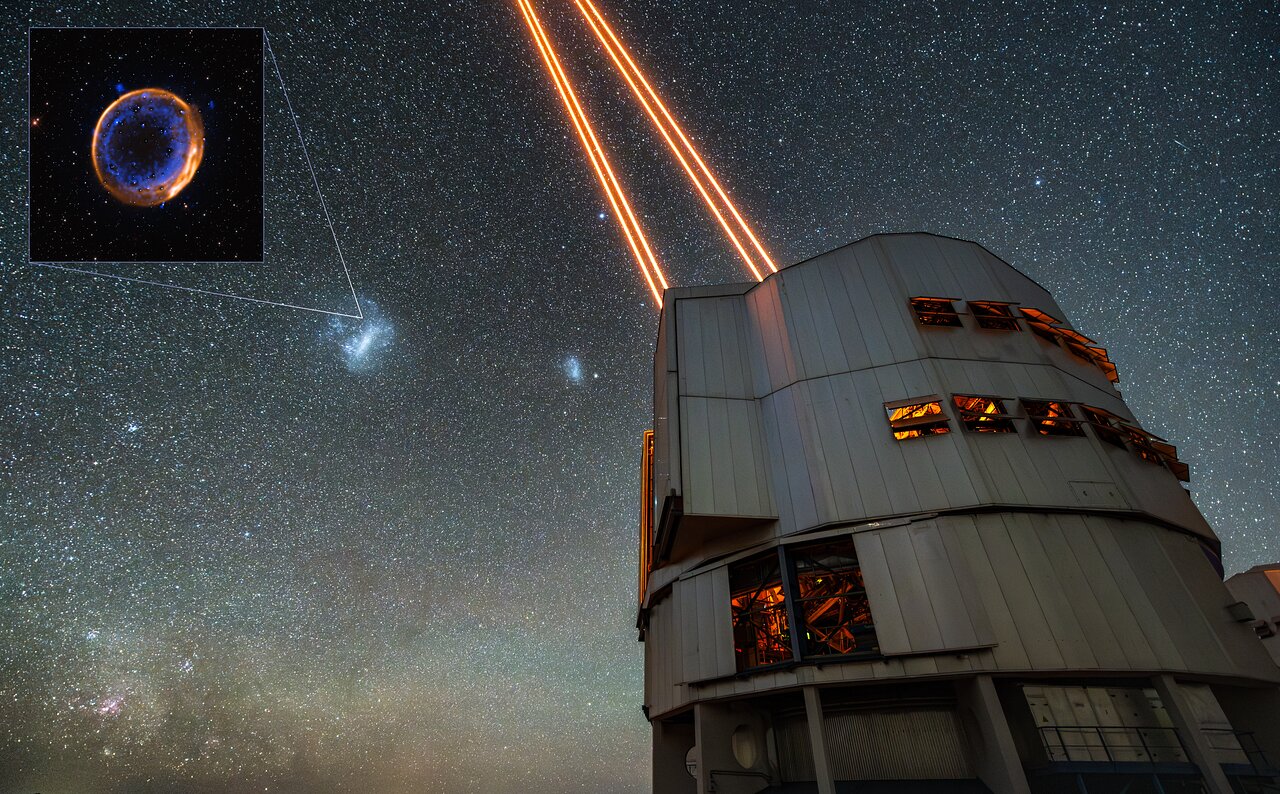
The 2026 Nobel Prize in Physics was awarded to Dr. Francis Halzen for creating the IceCube Neutrino Observatory, a massive particle detector embedded up to two and a half kilometers deep in the Antarctic ice sheet. Designed to detect elusive, virtually massless “ghost particles” traveling from extreme cosmic events across billions of light-years, the telescope uses a solid cubic kilometer of pristine glacier ice equipped with over 5,000 optical sensors to capture rare, faint flashes of blue light. Just as IceCube filters out immense environmental static to detect fundamental cosmic signals, retirees must build a structured financial plan to tune out daily market noise and focus on long-term strategy.
Image Credit: IceCube/NSF


Sign Up for The Launch
The Launch is a weekly email from Dr. Chris and his team. It’s full of retirement tips, news, listener questions & more, straight from us to your inbox. Get smarter about retirement in just 5 minutes every week. Let’s go!
Episode Transcript
Introduction
Dr. Chris Mullis, PhD, CFP®: With interest rates touching 20-year highs, the Fed raising rates, oil back over $100, and the stock market hitting 27 record highs this year, it’s easy to feel like you’re looking at a dashboard of conflicting signals. But if you’re a super saver with a multi-million dollar nest egg, today’s market isn’t a threat.
It’s one of the greatest income-generating opportunities we’ve seen in decades. Are you ready?
NASA: 3, 2, 1, 0 and lift off. Lift fell Americans return to space as discovery clears the tower.
Dr. Chris Mullis, PhD, CFP®: Welcome back to Retirement Isn’t Rocket Science. I’m your host, Dr. Chris Mullis. I’m a practicing retirement planner with 21 years of experience and the founder of NorthStar Capital Advisors, a retirement and tax planning firm. You can check us out at Retirenorth.com.
I spent my first career as an astrophysicist using NASA’s great space observatories and giant telescopes in Hawaii and Chile to map the outer edges of the universe. Today, as a certified financial planner, I’m helping you navigate a different kind of frontier that’s no less important. That’s your retirement.
If you haven’t already joined the crew, I invite you to subscribe to our weekly retirement newsletter called The Launch. This is where we share all the valuable resources, links, and action steps to make your retirement even better.
You can sign up for The Launch by visiting retirementisntrocketscience.com. Episode 28 begins now
In today’s show, can you ignore the midterm headlines and still win at retirement? And why did your safe and boring bond funds lose value when interest rates went up? And why might that actually be the best news for your retirement paycheck? And finally, what does a telescope buried two miles deep in an arctic ice have in common with your retirement plan? It’s a lot more than you might think, and it just won the twenty twenty-six Nobel Prize in Physics.
Retirement Briefing Room
Dr. Chris Mullis, PhD, CFP®: Welcome to the Retirement Briefing Room. We’re pulling up the blueprint on your financial life, focusing on what actually works in the real world, and mapping out clear, actionable steps for your retirement mission. We’ve just entered the fourth quarter of twenty twenty-six. If you’ve been turning on the financial news lately, you can feel like you’re looking at a dashboard of conflicting signals . On one hand, you see headline after headline warning about interest rates climbing to levels we haven’t seen in two decades, the Federal Reserve resuming rate hikes, oil surging past a hundred dollars a barrel amidst Middle East shipping disruptions, and another heated midterm election season right upon us.
On the other hand, the stock market has quietly marched to twenty-seven record highs already this year, fueled by explosive corporate earnings and unprecedented waves of artificial intelligence investment If you’re five years away from retirement or already enjoying it with a hard-earned nest egg, this backdrop can leave you wondering, “How do I separate the daily noise from my long-term financial trajectory?
Are these higher interest rates a threat to my portfolio, or are they a hidden gift for my retirement income plan? To answer those questions, we are diving deep today in a standout research piece on the Kitces platform. Kitces is the go-to source for planning-centric financial advisors, and it pains me to have to say that ’cause I think all real financial advisors should be planning-centric, but that’s just not the way the world works.
Today, we’re focusing on a piece written by James Liu. He’s a chartered financial analyst, and the CEO of Clearonomics. James walks through
seven important market aspects for the fourth quarter of twenty twenty-six, and today we are translating those observations into actionable strategy for your retirement mission Let’s start with the headline story of the quarter: interest rates. In September, the 10-year Treasury yield touched five point three percent, a level we haven’t seen since two thousand two.
The 30-year Treasury reached five point six percent, while investment-grade corporate bonds are now yielding around six percent. Now, if you remember twenty twenty-two, rising interest rates were painful because runaway inflation dragged down both stocks and bonds simultaneously. But James highlights a critical distinction in today’s environment.
Current yields are being driven by rising real inflation-adjusted yields. This isn’t a panicked response to hyperinflation. It reflects genuine economic growth, heavy corporate capital spending in AI, and heavy bond issuance absorbing investor demand. For diligent retirement savers preparing to launch and build out their retirement paycheck, this is a monumental shift.
For over fifteen years following the two thousand eight financial crisis, retirees were starved for yield. You were forced to take an extra equity risk to generate modest portfolio income. Today, the yield curve has uninverted and slopes upward, offering real durable income across high-quality fixed income How do leading retirement planners use this in the real world?
We use these multi-decade high yields to solve the single biggest threat to early retirement: sequence of returns risk. By building a structured cash flow bucket using bonds, you can lock multiple years of retirement spending in.
That means when the stock market experiences a temporary pullback, and notice I said when, not if. We know those pullbacks come. It’s just the nature of being an investor. When the stock market experiences a temporary pullback, your monthly income remains completely untouched.
You don’t have to sell equities at a discount because your income engine is running smoothly using the fixed income fuel or yield. From a tax and estate planning perspective, holding these higher-yielding fixed income assets inside a tax-deferred IRA while keeping growth-oriented equities in taxable brokerage or Roth accounts optimizes long-term asset location and minimizes your tax drag.
Now let me turn to the Federal Reserve and inflation. In September of this year, which is just a month ago, but time travels fast. In September, the Fed raised its target benchmark rate by a quarter point to a range of three point seven five to four percent, its first rate hike in three years.
Headline CPI inflation sits at three point four percent, largely driven by energy prices as brent crude oil climbed back over a hundred and eight dollars per barrel due to maritime disruptions around the Strait of Hormuz and the Red Sea. Gasoline prices are up over a dollar sixty per gallon since January.
However, under the new Federal Reserve Chair, kevin Warsh, the central bank is shifting its communication style. Chair Warsh is stepping back from the standard forward guidance, urging markets to look at core economic data rather than hanging on every word from the Fed.
And when you look deeper at the data, supercore CPI, which excludes food, energy, and housing, rose just two percent. The inflationary pressure is concentrated in oil supply shocks rather than broad economic overheating. Furthermore, the Fed’s dot plot indicates rates will likely remain higher for longer, holding steady around four point one two five percent through twenty twenty-seven that’s a lot of data.
So how do we account for this in a comprehensive wealth plan? First, energy shocks remind us why inflation protection must be woven in to your long-term income portfolio through stocks. Second, a higher for longer Fed environment means holding excessive cash in standard brick-and-mortar checking or low-yield savings accounts carries a massive opportunity cost.
Working with an advisor allows you to have an accountability partner to make sure you’re sweeping idle cash into higher-yielding locations to take advantage of this interest income before the rate cycle shifts again. That brings us to corporate earnings, which have been the true engine under the hood for this market.
S&P 500 earnings grew by approximately twenty-nine percent year over year in the third quarter, marking three consecutive quarters of growth above twenty-five percent. That’s far exceeding the historical average of eight percent. Even more encouraging from a risk management perspective, this growth wasn’t just concentrated in the Magnificent Seven tech giants. All eleven S&P 500 sectors posted year-over-year earnings gains, with revenues growing twelve percent. Meanwhile, international markets have delivered strong results, with emerging markets up over twenty percent year to date and developed international stocks up nearly eleven percent From an investment and tax planning perspective, this broad-based strength is a prime opportunity for portfolio rebalancing.
If you don’t already have a strategy for consistently and with discipline keeping your portfolio in a healthy balance, I strongly encourage you adopt that. When tech or large cap growth stocks run hot, your portfolio asset allocation can drift out of alignment, exposing you to concentrated downside risk.
Leading advisors, the best money managers, don’t do this rebalancing on an ad hoc or discretionary basis.
There is a systematic approach. There is real mathematical guidance to rebalance, trimming appreciated equity positions, harvesting capital gains within tax advantage accounts, and redeploying that capital into underperforming stock asset classes or bonds to secure your desired risk profile.
We also can’t ignore the buzz around artificial intelligence, copper and upcoming mega IPOs like OpenAI and Anthropic. Capital spending on AI infrastructure has sent copper prices surging seventeen percent to all-time highs due to the demand from data center cooling and power transmission, combined with supply cuts from Chile and the Congo.
Yet, as James points out, US labor productivity growth stood at one point four percent in Q2 of this year, solid but not yet demonstrating a massive economy-wide AI productivity boom. Just like the internet expansion in the late 1990s, the real productivity gains for transformational technology takes years to spread across the broader economy.
For retirees, the lesson is clear. Don’t chase hot IPO headlines or speculative single stock bets. Broad diversification across sectors ensures you capture the long-term upside of innovation without risking your core Finally, with the midterm elections just around the corner in November, it is natural to feel anxious about how political shifts in Congress might impact your tax rates, estate plans, or retirement accounts.
But historical data dating back to nineteen thirty-three shows that the S&P five hundred has averaged an eight point six percent annual return during midterm election years, and markets have consistently advanced under virtually every combination of political leadership. Corporate earnings, interest rates, and economic productivity drive market returns over time, not political parties.
Partisan anxiety is one of the quickest ways to make emotional mistakes with your nest egg. Before we conclude today’s briefing, let me summarize the key takeaways from James’ Q4 analysis. First, multi-decade high bond yields offer a golden opportunity for pre-retirees and retirees to capture higher yields and de-risk their retirement income plan.
Second, the Federal Reserve’s rate hike reflects resilient growth and oil supply shocks rather than economic collapse, emphasizing the need to move excess cash, I call that lazy money , move that lazy money into higher-bearing assets.
And third, corporate earnings growth is remarkably broad-based across all sectors and international markets, providing an ideal environment for strategic portfolio rebalancing and tax-efficient repositioning Fourth and final, historical data proves that long-term market performance is driven by economic fundamentals and corporate profits, not midterm election outcomes or political headlines.
Remember, navigating market noise is a lot like orbital navigation. You don’t adjust your entire trajectory every time you pass through a localized solar flare. By keeping your eye on the fundamental economic indicators, earnings, real yields, and productivity, you can maintain total financial peace of mind while enjoying the adventure of your retirement years. You’ll find a link to James’ article in the show notes and in our weekly newsletter. Now, let’s head over to mission control to answer your financial questions and get you retirement ready
Ask Mission Control
Dr. Chris Mullis, PhD, CFP®: Discovery Houston, 20 seconds to LOS. Tres Hothead. Nice to be in orbit.
Welcome to Ask Mission Control. This week’s question comes from Jodi. She writes, “I’ve always been told that bonds are supposed to be the safe and boring part of our portfolio. With interest rates going up this year, I figured that would be great news for our conservative investments.
But when I opened my monthly statement, the overall value of our bond funds actually went down. If interest rates are rising, why is the money in my bond fund shrinking? Could you help us make sense of this in plain English?” Jodi, thanks for asking this. You’ve highlighted what is easily one of the most counterintuitive concepts in personal finance.
Seeing the conservative portion of your hard-earned nest egg dip in value right when you expect it to grow feels like you’re firing your thrusters and watching your spacecraft slow down instead of accelerate. It certainly throws off your internal navigation.
To understand why this happens, especially when you own bond ETFs or exchange-traded funds rather than individual bonds, it helps to picture a simple playground seesaw. On one side of the seesaw, you have interest rates. On the other side, you have bond prices. When interest rates go up, the existing bond prices go down.
They move in opposite directions every single time. Here’s why. Imagine your bond fund bought a basket of bonds two years ago paying a two percent interest rate.
Suddenly, interest rates rise and brand new bonds are paying five percent. If an investor wants to buy into a bond fund today, nobody’s going to pay full price for a fund holding older two percent bonds when they can get five percent bonds down the street. To make those older bonds attractive to buyers on the open market, the price, the share price, or the net asset value of your bond fund has to drop.
Now, why does this happen with bond ETFs specifically compared to owning individual bonds? If you buy a single individual bond, you can hold it all the way to its maturity date, and assuming the issuer doesn’t default, you receive a hundred percent of your original principal back. But a bond ETF or a bond fund works differently.
It’s an ongoing liquid pool of hundreds or thousands of bonds. The ETF manager continually buys and sells bonds to maintain a specific target time horizon, like a seven-year average duration. Because a bond fund never reaches a single maturity date where all the money is returned at once, its market price fluctuates every single day based on the current interest rates
this is where working with a retirement-focused, hopefully a retirement specialist, who is a certified financial planner, can provide true peace of mind. From an income planning perspective, we build a cash buffer, keeping an extended period’s time’s worth of living expenses in liquid high-yield cash, so you never have to sell a bond ETF while the share price is down. From a tax management perspective, holding these bond funds inside a tax-deferred account, like a traditional IRA, keeps those growing interest payouts shielded from taxes until you withdraw those funds to use in life.
And from an investment perspective, aligning duration with your retirement timeline ensures your conservative assets do exactly what they were hired to do: support and stabilize your financial flight path. Jodi, thank you for asking the question that I think that many people are certainly wondering about now.
Rising interest rates might cause short-term turbulence on your statement, but they provide the high-octane fuel your portfolio needs to generate reliable income for decades to come. If you’ve got a retirement question or just a general finance question that you’d like us to answer on the show, head over to retirementisntrocketscience.com and click Ask a Question.
Or if you wanna become my new favorite, you can skip to the front of the line by calling mission control at 704-234-6550 and record your audio question. Now, let’s put on a parka and head south to hunt for ghost particles in Antarctica and to learn how the 2026 Nobel Prize teaches us how to filter out financial noise and focus on what truly matters
NASA: In Discovery Houston, we’ve got a good picture of Steve.
Retirement Big Picture
Dr. Chris Mullis, PhD, CFP®: Welcome to the Retirement Big Picture part of our show. This is where we look up and look out to expand our appreciation and understanding of our amazing universe. During my previous career as an astrophysicist, I had the pleasure of working with two Nobel Prize winners. This week, the scientific world was abuzz with incredible Nobel news.
The twenty twenty-six Nobel Prize in Physics was awarded to Dr. Francis Halzen, a Belgian-American physicist at the University of Wisconsin-Madison. Dr. Halzen won science’s ultimate distinction for creating the IceCube Neutrino Observatory, a truly mind-boggling telescope embedded deep within the Antarctic ice sheet at the South Pole.
Now, when you think of a telescope, you naturally probably picture a polished mirror pointing up at the night sky. But IceCube points down into the Earth using a solid cubic kilometer of crystal clear ice buried up to two and a half kilometers below the surface.
Why go through the extreme effort of building a massive telescope at the bottom of the world? Because Dr. Hausen was hunting for neutrinos, often called ghost particles. Neutrinos are among the most mysterious subatomic particles in existence. They are almost completely massless, carry no electric charge, and travel at nearly the speed of light. Because they rarely interact with normal matter, trillions of them are passing harmlessly through your body at this very second without leaving a trace.
They stream out from the universe’s most violent cosmic engines, exploding stars, colliding neutron stars, and super massive black holes. Unlike ordinary starlight, which gets blocked by interstellar dust or bent off course by magnetic fields, high-energy neutrinos travel in a dead straight line from their birthplaces across billions of light-years.
If you catch one, it serves as an uncorrupted cosmic messenger pointing directly back to the exact cosmic explosion that created it To catch these elusive ghosts, Dr. Halzen realized in 1988 that pristine Antarctic ice could act as a giant particle detector. He envisioned melting deep holes in the glacier and dropping down strings of over five thousand hypersensitive optical sensors.
The goal was to wait for the microscopic chance that a passing ghost particle hits an atom in the ice, producing a faint flash of blue light. When Dr. Halzen first proposed this radical idea, almost no one believed it would work, including himself. It took twenty-three years of painstaking engineering, navigating six-month polar nights, and enduring freezing temperatures below minus fifty degrees Fahrenheit before the observatory was completed in 2011.
Today, a dedicated skeleton crew of winter overers keep the station running through total darkness, and out of the millions of neutrinos washing over Antarctica, IceCube registers only about one significant ghost particle detection per day. As a former astrophysicist who now guides diligent retirement savers into and through retirement, I see a profound lesson here for anyone managing their nest egg.
In both astrophysics and financial planning, the biggest challenge isn’t a lack of information, it’s overwhelming noise. Every single day, retirees are bombarded by financial noise, sensational news headlines, market volatility, political chatter, and unsolicited opinions. If you try to react to every passing headline and digest every piece of information, you’re chasing phantom signals that can throw your retirement trajectory completely off.
Building a sustainable, multi-decade financial trajectory requires building your own IceCube observatory. It means tuning out the daily noise, setting up a structured strategy, and focusing on the underlying fundamental signals that truly matter, like tax-efficient withdrawal strategies, optimized Social Security timing, and proper portfolio management.
Just as Dr. Halsen proved that long-term vision, patience, and discipline reveal the universe’s deepest secrets, a structured professional retirement plan brings absolute clarity and peace of mind to your financial future.
If you wanna look at a beautiful image of that incredible observatory at the bottom of the world that captured the 2026 Nobel Prize in Physics, you can see it in this week’s newsletter called The Launch. You can sign up for The Launch at retirementisntrocketscience.com.
Conclusion & Action Items
Dr. Chris Mullis, PhD, CFP®: Before you hit the ground running, here’s your retirement mission checklist. These are the important actions you should tackle this week to make your retirement even better. Number one, audit your cash reserves.
Move idle cash out of low-yielding checking accounts and sweep them into high-yield savings accounts or something similar. Number two, build a multi-year income bucket. Work with your certified financial planner to construct a high-quality bond and cash war chest, leveraging these beautiful 6% investment grade corporate yields that are now available, and use this to cover distributions regardless of economic or market gyrations.
And number three, execute a strategic portfolio rebalance. Take advantage of the S&P 500’s record highs and that 29% earnings growth by trimming over-concentrated growth positions and redeploying gains into diversified asset classes and tax-efficient accounts. This is Dr. Chris reminding you that like the shuttle cockpit, where there’s a commander and a pilot, in this case, you are both of those.
You are the commander and the pilot of your retirement mission. Take control of your trajectory today to worry less and retire more. Because with smart planning and a little foresight, retirement isn’t rocket science.
Credits
Dr. Chris Mullis, PhD, CFP®: We thank the National Aeronautics and Space Administration for providing the radio communications between the space shuttle astronauts and the flight controllers.
Disclaimer
This show is for informational and entertainment purposes only. It is not specific tax, legal, or investment advice. Before considering acting on anything you hear in this show, first consult your own tax, legal, or financial advisor