
Real Estate Investing — Love It or Leave It?
Is your “passive” rental income actually a part-time job stealing the freedom you worked decades to earn? In this episode, Dr. Chris Mullis breaks down why traditional portfolios often outshine real estate and how to navigate the complex “tax gravity” of selling an out-of-state vacation home. We’ll also peer through the cosmic dust to discover the “God’s Hand” and what it teaches us about finding clarity in your financial mission plan.
Retirement Big Picture
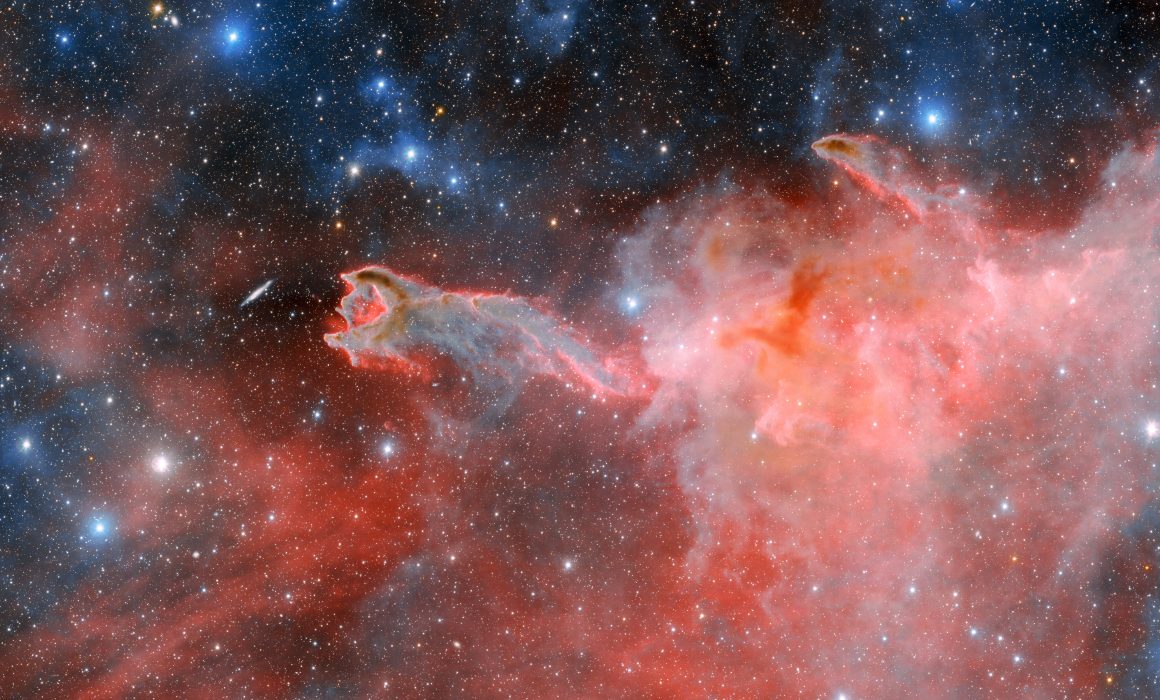
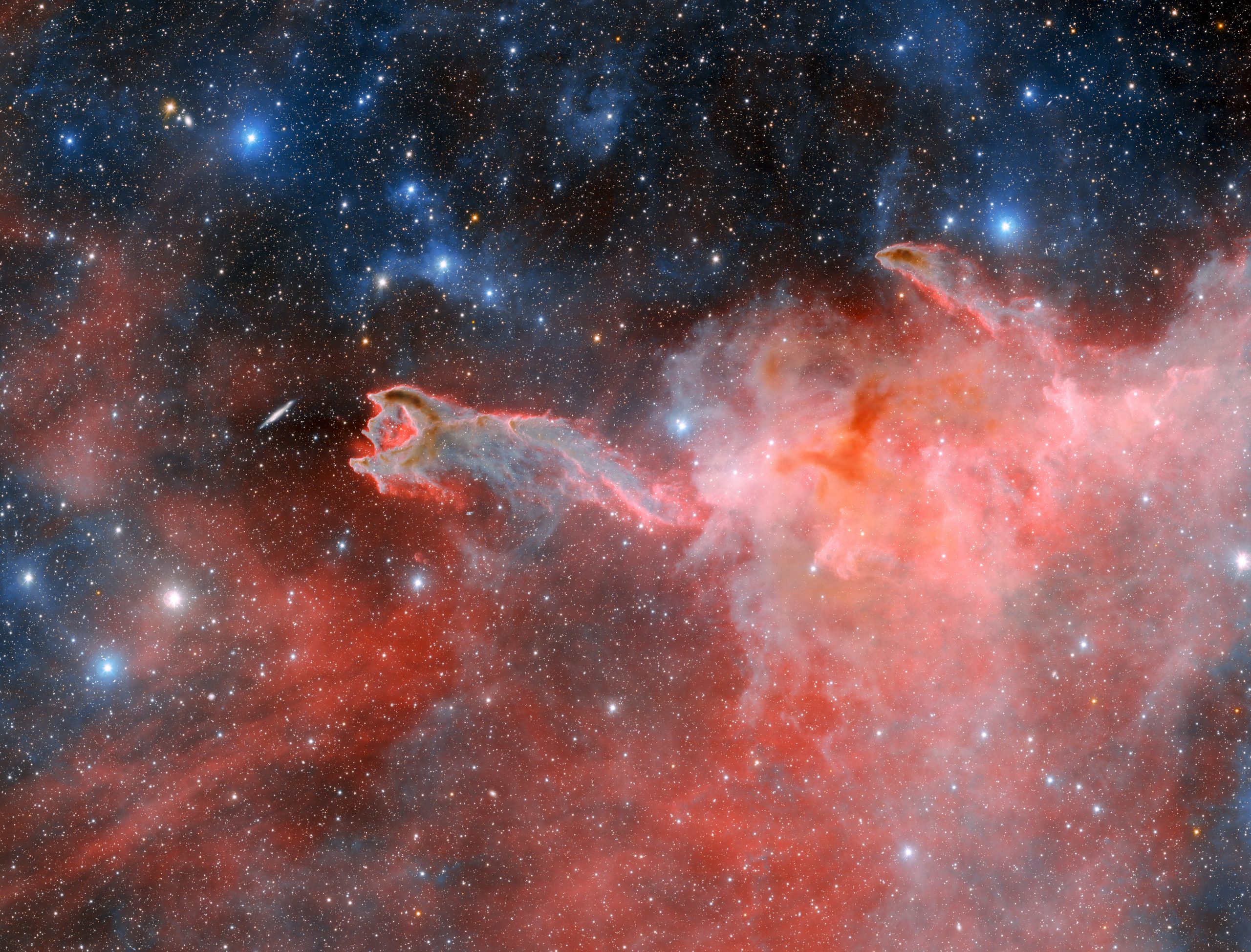
We explore the hauntingly beautiful CG4, also known as “God’s Hand,” a cometary globule of dense, dark dust located in the constellation Puppis. Dr. Chris explains how the Blanco 4-meter telescope in Chile uses specialized filters to peer through this cosmic fog, revealing new stars forming deep within the “fingers” of the hand. This striking image serves as a metaphor for retirement planning: while inflation and market volatility can feel like an ominous cloud, the right perspective and professional tools can help you see the growth potential hidden inside.
Image Credit: CTIO/NOIRLab/DOE/NSF/AURA

Sign Up for The Launch
The Launch is a weekly email from Dr. Chris and his team. It’s full of retirement tips, news, listener questions & more, straight from us to your inbox. Get smarter about retirement in just 5 minutes every week. Let’s go!
Episode Resources
- What Issues Should I Consider When Owning a Rental Property? — Dr. Chris’ 25-point checklist
- Why a Traditional Investment Portfolio is Better than Real Estate — Meg Bartelt CFP®, RICP®
Episode Transcript
Introduction
Dr. Chris Mullis, PhD, CFP®: Hi there, Dr. Chris here. Before we start the countdown to today’s show, I wanna take a second to thank our amazing ground crew, everyone who has recently left a written review on Apple Podcast or given the show a star rating on Spotify. I sincerely appreciate the kind words. You know, I always say retirement isn’t rocket science, but your feedback is the navigation system that helps me steer our show.
It tells me exactly what topics you want to hear more about and keeps me motivated to keep working on making this show even better. So if you’re enjoying the flight so far and haven’t had a chance to leave a written review on Apple Podcasts or a star rating on Spotify. I’d be incredibly grateful if you took just 30 seconds to do so.
It’s a lot easier than calculating your optimal withdrawal strategy, I promise. Thank you again for your support. Now, let’s get into today’s show. I.
Dr. Chris Mullis, PhD, CFP®: we’ve all heard the siren song of real estate, buy a rental property, collect a check, and watch the value soar. It sounds like the ultimate passive income dream, doesn’t it? That dream can quickly turn into a high maintenance mission that drains your most valuable assets, your time and your energy.
Today we’re looking at real estate investing. Is the juice worth the squeeze? Are you ready?
NASA: 3, 2, 1, 0 and lift off. Lift fell Americans return to space as discovery clears the tower.
Dr. Chris Mullis, PhD, CFP®: Welcome back to Retirement Isn’t Rocket Science. I’m your host, Dr. Chris Mullis. I spent my first career as an astrophysicist, mapping the cosmos with NASA’s space telescopes. Now as a certified financial planner with 21 years of experience, I help you navigate the universe of retirement.
Our mission here is clear, lower your taxes, strengthen your portfolio, and give you the confidence and the capacity to spend more. Buckle up. We’re going to master your money and explore the mysteries of the universe along the way.
Dr. Chris Mullis, PhD, CFP®: In today’s show, is your rental property a golden goose or a part-time job? In disguise, a listener asks if he sells a second home. That’s out of state, which state gets the capital gains tax and reaching for the stars. The mystery of the cosmic hand. In the gum Nebula.
Retirement Briefing Room
Dr. Chris Mullis, PhD, CFP®: Welcome to the retirement briefing room. This is where we huddle up to take a close look at important aspects of your financial life, spotlight pathways of success, and think about how to integrate these into your retirement mission plan. Today we’re diving into an insightful piece titled.
Why a traditional investment portfolio is better than real estate. It’s written by Meg Bartelt. Meg is the founder and lead planner of Flow Financial planning, a fee only virtual firm dedicated to empowering early to mid-career women in the technology industry with credentials as a certified financial planner.
Retirement income planner and a master’s in financial planning. She specializes in helping tech professionals navigate complex compensation structures like restricted stock units, stock options, and the unique opportunities of IPOs despite the skills and knowledge, to handle the most complicated options.
Meg advocates for the boring stuff, traditional portfolios of stocks and bonds, arguing that the true passive income doesn’t come from a deed, but from a well-managed brokerage account . Now, as a former rocket scientist, I love to look at the telemetry. The data, and the data suggests that while we have a cultural itch to own property, we can touch. It very likely is creating a drag on our retirement trajectory
Let’s look at the emotional allure versus the reality of allegedly passive income. Meg points out that we love real estate because it feels real. We can see the house, we can touch the bricks. And unlike your 401k or your IRA, you don’t see a flashing red number on the news every night telling you your home value dropped 2% today.
It makes it emotionally easier to hold long term, but here’s the mission control reality. Real estate is rarely passive as the saying goes, your index fund won’t call you at 3:00 AM because a pipe burst. I often remind my clients that physical rentals are more like a part-time job than an investment. If you’re 65 and looking for a return on life, do you really want to be managing a landscape crew or chasing down a late rent check
Next, let’s consider the hidden drag on your net worth. Many of our listeners. Have achieved a multimillion dollar nest egg, and a big chunk of that might be tied up in property. This brings us to concentration risk. Meg wisely warns that having a massive percentage of your wealth in one asset, in one zip code, in one geo region is the opposite of diversification.
If that neighborhood declines or an earthquake hits your mission is in jeopardy then there’s the math. Meg highlights that from 1992 to 2024, the s and p 500 averaged about 10.4% annually while the US housing market grew at only 5.5%. I’d add that once you factor in the friction, the 6% realtor commissions, insurance , property taxes, and maintenance.
Real estate often trails a simple low cost, tax efficient index fund by a wide margin.
Next in our lens is the tax torpedo and complexity. In this stage of life, tax management is everything. Meg mentions that real estate can optimize taxes, but also adds immense complexities to your tax return. Requiring A CPA to handle things like scheduled E I’d add that there’s a major gotcha depreciation recapture, even if you don’t claim depreciation, the IRS assumes you did.
They’ll want their cut when you sell the property. Furthermore, there’s often a tax torpedo. That $2,000 monthly rental check may look great, but it could push your social security benefits into being 85% taxable, effectively lowering your real world return
So let’s consider strategic maneuvers and a potential exit strategy. So what if you’re equity rich and cash poor? Many retirees, or soon to be retirees should consider selling their rental properties.
This moves dead equity into an income producing portfolio, giving you more monthly spending power and the flexibility to adjust. If you still want real estate exposure without the toilets and tenants, I would point you towards REITs real estate investment trusts. Very importantly, I advocate for publicly traded REITs.
They offer the same asset class benefits as real estate, physical real estate, but with the liquidity to sell in seconds. If you need cash for a medical or emergency or a grandkid’s tuition. Ultimately, if an investment is taking more energy, then it’s giving you freedom.
It’s a bad investment for a retiree. Now to help you think through this matter in a structured fashion, I’ve created a checklist to help you better understand the challenges and nuances that exist with owning real estate. Whether it’s the landlord’s responsibilities. Managing risk or investment and tax and estate concerns.
This will help you make an educated and informed decision on this complex topic. This checklist covers some key issues you must consider when owning rental property, such as the extent of responsibilities a landlord may be subject to the increased and varied risks of owning rental property. The multitude of tax factors that come into play when owning rental property, the impact owning a rental property may have on your estate.
You’ll find this free resource in our weekly newsletter called The Launch. You can sign up for the newsletter by visiting retirement isn’t rocket science.com. Remember, retirement isn’t about collecting the most stuff. It’s about the return on life. If your investment property has become a master of your Saturday mornings rather than a servant of your mission plan, it might be time to simplify.
You’ve worked incredibly hard to build this nest egg. Don’t let it become a job you forgot to retire from.
You’ll find a link to Meg’s article. She does a beautiful job of laying out the pros and cons of real estate and investing, and she even addresses . The narrow edge case of where real estate investing can make sense. Meg is an incredible writer. Please go read the article directly to learn more.
Here again, you’ll find a link to Meg’s article in the show notes and in our weekly newsletter. Now let’s head over to Mission Control to answer your financial questions and get you retirement ready.
Discovery Houston, 20 seconds to LOS. Tres Hothead. Nice to be in orbit.
Ask Mission Control
You’ve spent years building memories at the lake house or the mountain cabin, but when it’s time to pass the keys to a new owner, you might find two different state tax collectors waiting on the porch. Does The tax gravity of your home state pull harder or does the state where the dirt actually sits?
Get the first bite of the apple. Welcome to Ask Mission Control. This week’s question comes from Justin. Justin asks, I own a vacation home in a different state than my residence. When I sell that vacation property, do I pay capital gains tax in my home state or the state where the vacation property is located
Justin. First of all, congratulations on having that vacation home. Whether it was a beach house in South Carolina or a cabin in the Blue Ridge Mountains. These properties are often the command centers for family memories, but selling them can feel a bit like trying to navigate an asteroid filled.
Without a map. As a former rocket scientist, I like to look at the laws of physics and in the tax world, there’s a law called csis. It’s just a fancy Latin word for location when it comes to real estate. The state where the land is physically located always gets the first crack at the taxes. They provided the roads to get to the house and the emergency services that protected it.
They want their cut of the profit when you launch out of that investment. So the short answer is you will likely owe taxes to both states. But wait, don’t hit the panic button just yet. You aren’t necessarily paying double the tax. Think of it like a multi-stage rocket launch. Stage one is the state where the property is located.
Let’s call that the source state. You have to file a non-resident tax return there, you’ll calculate your capital gain. That’s the difference between what you sold it for and your cost basis, what you paid plus improvements. Stage Two is your home state because you are a resident there, they generally claim the right to tax all of your income no matter where in the universe it was earned.
Now it sounds like double taxation gravity, which could pull your retirement nest egg right out of orbit. However, most states have a credit for taxes paid to other states. Your home state will essentially say, since you already paid $10,000 to the other state, we will give you a credit for that $10,000.
So you aren’t paying us for the same dollar twice.
However, and this is a big, however, if your home state has a higher tax rate than the vacation home state, you’ll usually owe the difference to your home state if the vacation home is in a state. For example, that has no income tax, like Florida, and you live in a state with an income tax like North Carolina, your home state is going to want its full.
Share note. There’s a real mission critical task here, and that’s cost basis. If you’ve owned this home for 20 years, did you keep the receipts for the new roof, the deck expansion, the kitchen remodel? Every dollar you’ve spent improving that home acts like heat shielding. It reduces the gain and protects your money from being burned up by taxes.
And Justin, since you mentioned this is a vacation home, we have to be clear. Unlike your primary residence, you generally don’t get that 250,000 or $500,000 tax exclusion. This is a pure investment asset in the eyes of the IRS. Finally, we need to look at the feasibility of the sale within your whole plan.
If this sale is going to trigger a massive tax bill, a certified financial planner might look at your other investments. Maybe we can harvest some losses in your brokerage account to offset these gains, or if you’re charitably inclined, there are ways to use highly appreciated securities to fund a donor-advised fund, potentially wiping out some of that tax burden while fueling your legacy
In mission control. We don’t just look at the sale, we look at the full trajectory. Selling a multimillion dollar asset across state lines is exactly why Google searches. Enough you need a co-pilot, maybe two co-pilots, a tax professional and a tax centric financial planner to ensure you don’t leave a trail of unnecessary tax dollars behind you as you exit this orbit.
A vacation home is a major milestone in your retirement journey. Don’t let the complexity of multi-state taxes keep you grounded. With the right calculations, you can ensure a smooth landing and a well-funded next adventure. Many thanks to Justin for submitting this question. If you’ve got your own question that you’d like us to answer on the show, head over to retirement isn’t rocket science.com and click Ask a question.
Or even better, you can skip to the front of the line by calling Mission Control at 7 0 4 2 3 4 6 5 5 0 and record your audio question. Now let’s broaden our perspective and head over to look at a cosmic monster that looks like it’s ready to devour an unsuspecting galaxy.
NASA: In Discovery Houston, we’ve got a good picture of Steve.
Retirement Big Picture
Dr. Chris Mullis, PhD, CFP®: Welcome to the Retirement Big Picture part of our show. This is where we look up and look out to expand our appreciation and understanding of our amazing universe. A long time ago in a galaxy not far, far away, I spent nearly two decades studying the cosmos as an observational astrophysicist.
So this is a subject that I love. Love to talk about. Now. If you’ve been following the news in the space world recently, you might have seen a striking image that looks like something straight out of a Hollywood blockbuster. It’s a dark, ominous shape outlining a haunting red glow, reaching out through a field of stars.
Astronomers have nicknamed it God’s Hand, but its formal name is CG four in the world of astrophysics, we call this a commentary globule. Now, don’t let the name fool you.
It has nothing to do with comets like Haley’s. It gets that name purely because of its shape. It has a thick, dusty head and a long wispy tail making it look like it’s cruising through the cosmos. CG four was first recognized back in 1976. It was discovered using the UK Schmidt telescope in Australia .
For a long time, these objects were the hidden ghosts of our galaxy. They are notoriously difficult to detect. Because they are made of incredibly dense dark dust. This dust is so thick, it blocks almost all visible light from the stars behind it. Think of it like a thick fog rolling into a harbor.
You know the lighthouse is there, but you can’t see the beam. However, thanks to the dark energy camera D cam. Which is mounted on the Victor m Blanco four meter telescope down in Chile. We’ve finally seen CG four in a whole new light. . The D cam uses a special hydrogen alpha filter.
This is a tool that allows astronomers to ignore most of the light. Focus specifically on the glow of ionized hydrogen. When the hydrogen gas in the head of the cosmic hand gets bombarded by radiation from nearby stars, it glows a faint ghostly red. It’s that glow that allows us to see the structure of the hand and the fingers reaching out.
So where exactly is this cosmic hand located? It is in the constellation pup-pis , where my fellow stargazer out there. pup-pis represents The stern of a great ship. Now here’s the catch, because pup-pis is a Southern constellation, it is quite low on the horizon for most of us in the United States. If you are in the southern US, places like Florida, Texas, maybe Arizona, you can see parts of pup-pis during the winter months.
But. It never climbs very high. Is it something you can see in your backyard telescope? I’ll be honest with you, unless you have a professional grade setup and some serious astrophotography equipment, CG four is going to remain invisible to your systems.
It’s just too faint and too shrouded in dust. It really takes the power of a four meter ground-based telescope like the Blanco, to pull those details out of the darkness. Now, cG four has enough gas and dust to create several new stars the size of our own sun.
Even though the radiation from nearby bully stars is slowly eroding the hand away, literally stripping the flesh off the cosmic bone, there is still life being created inside. There’s a bit of a mystery here too. Astronomers aren’t 100% sure how these globules get their shape. One theory is that they were once perfectly round clouds of gas that got blasted by a supernova, you know, a massive star exploding nearby.
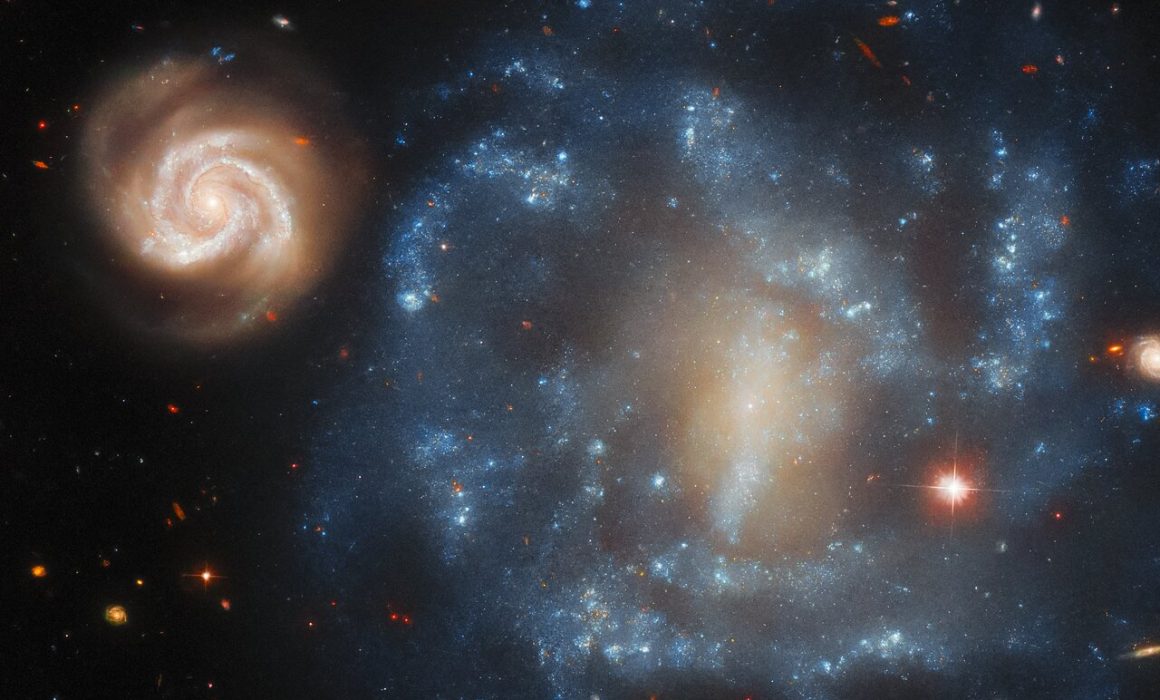
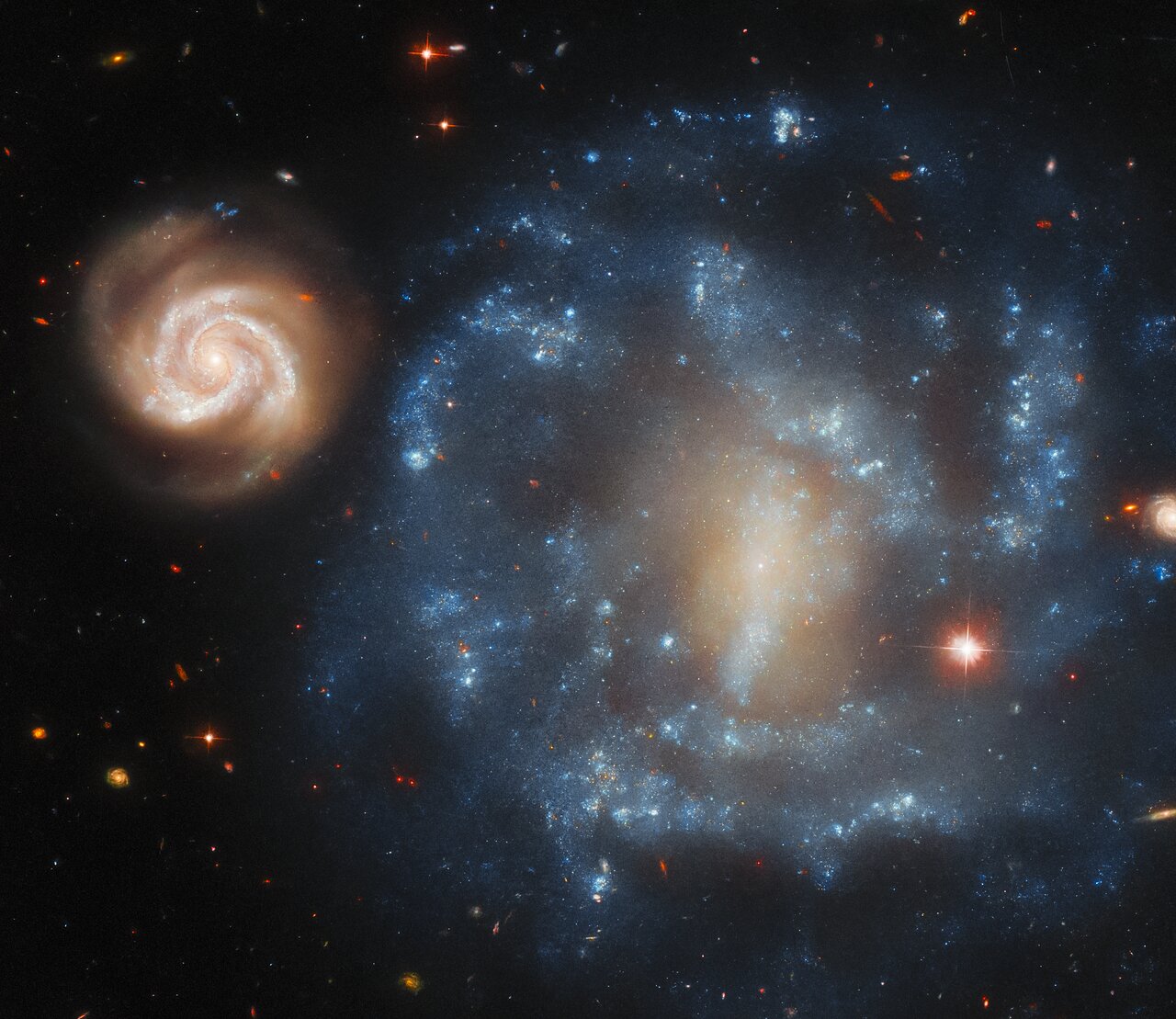
Another theory is that the winds and radiation pressure from a nearby pulsar, the vela pulsar, are acting like a cosmic leaf blower, sculpting the gas into those long trailing tails. In the image, it actually looks like CG four is about to gobble up a spiral galaxy that’s sitting in front of its fingers.
But don’t worry, that’s just a trick of perspective that Galaxy is actually 100 million light years away. It’s just again, a cosmic coincidence.
As a retirement planner, I can’t help but see a bit of of a metaphor here. Sometimes our financial future can feel like CG four, a bit dark, a bit shrouded in the dust of inflation or market volatility.
It can feel like there are some radiation pressures from taxes or healthcare costs trying to erode our nest eggs. Just like CG four, when we use the right filters, the right strategies, and the right perspective, you can see that there is incredible potential for new growth inside. You just need the right tools to see through the fog.
You don’t need to be a rocket scientist to navigate your future, but it certainly helps to have someone with a telescope looking out for the obstacles.
Before we turn away from the big picture, I just wanted to share a couple of nerdy details about the Blanco four meter telescope. It is a legend in the world of astronomy. I. Purchased on the summit of Sarah Tolo and North Central Chile. It has been the cornerstone of southern hemisphere observations for a half century.
As someone who’s spent years in the world of observational astrophysics, I can tell you that the Blanco isn’t just a piece of hardware. It is a workhorse that fundamentally changed how we understand the expansion of the universe. Completed in 1976. The Blanco was the largest optical telescope in the Southern Hemisphere for over 20 years until my colleagues at the European Southern Observatory established the very large telescope.
The four eight meter telescopes at Parel where I used to work, its location that is the Blanco’s location at Sara Tolo. Inner American Observatory was chosen because the Chilean Andes offers some of the clearest, driest and darkest skies on Earth. Now, in the early days, being an astronomer at the Blanco was a much more physical job to capture images.
You didn’t sit in a warm control room with a latte. You actually sat in a small steel cage at the very top of the telescope. That’s called the prime focus. You would spend the entire night sometimes in freezing temperatures. Manually swapping out massive glass photographic plates and tweaking the telescope’s position.
It was lonely, cold, and a bit like being a cosmic lighthouse keeper today. Thankfully, we use digital sensors and the cage is mostly a piece of history.
If the Blanco is the body, the dark energy camera D cam is the Modern Day Brain installed in 2012. This 520 Megapixel Beast is one of the most powerful widefield cameras in existence. Now, why is this special? It can see light from as far away as 8 billion light years, and the mission is it was built specifically for the dark energy survey.
Which mapped hundreds of millions of galaxies to figure out why the universe expansion is accelerating. Now it takes it back to the Blanco’s biggest claim to fame, dark energy. The Blanco played a pivotal role in one of the most important discoveries in the history of science. In 19 98, 2 teams of astronomers used observations from this telescope.
Others to study distant supernova. They expected to see the expansion of the universe slowing down due to gravity. Instead, they found it speeding up. This led to the discovery of dark energy, a mysterious force that makes up about 68% of the universe. This discovery was so monumental.
It earned the lead researchers the 2011 Nobel Prize in physics, and I had the honor of collaborating with this Nobel Prize team in a help space telescope program. My specialty involved. Hunting down distant galaxy clusters. Together we studied supernova in these distant galaxy families to extend their expansion of the universe research.
Let’s wrap this all up with one final thought, even with the big brothers like the James Webb Space Telescope. Or the very large telescope Now online, the Blanco remains indispensable because it has such a wide field of view. It can scan huge chunks of the sky very quickly.
Something larger telescopes can’t do. Think of the Blanco as the vintage four by four of the telescope world, it’s rugged, reliable, and can go places that fancy new sports cars can’t reach. It reminds us that sometimes the best way to see the big picture. Is to have a wide lens and a solid foundation.
Conclusion & Next Steps
Dr. Chris Mullis, PhD, CFP®: we’ve spent today digging into the nuances of real estate investing and how it does or doesn’t fit in your retirement plans. Now it’s time to open the hatch. This is your space walk. You are stepping out of the routine and into the bright light to turn today’s insights into a successful mission.
This isn’t just a stroll. This is where the work gets done to move from theory to results. Here are your mission objectives. Number one, apply the Clean Slate test. Ask yourself, if I didn’t own this rental property today and someone gave me its value in cash, would I go out and buy this exact house as an investment?
If the answer is no, it’s time to talk to a certified financial planner about a smart exit strategy. Number two, audit your net net return. Sit down with your records from the last three years, subtract taxes, insurance, repairs, and the cost of your own time from the rent you collected. Compare that final percentage to a quote, boring, diversified portfolio.
Finally number three, grab your free copy of my Rental Property guide. You’ll find the link in today’s show notes on your podcast app, and in our weekly newsletter and on our website at retirement. Isn’t rocket science.com/fourteen I challenge you to take one idea from today’s show and put it into practice this week to make your retirement even better.
Thank you so much for joining me. Remember, you’ve done the hard work of saving. Now let’s do the smart work of planning. Until next time, keep your eyes on the horizon and enjoy the adventure you are. Go for retirement.
Credits
Dr. Chris Mullis, PhD, CFP®: We thank the National Aeronautics and Space Administration for providing the radio communications between the space shuttle astronauts and the flight controllers.
Disclaimer
This show is for informational and entertainment purposes only. It is not specific tax, legal or investment advice. Before considering acting on anything you hear in this show, first consult your own tax, legal, or financial advisor.