

Scary Headlines vs. Market Reality: The Mid-Year 2026 Reality Check
Cut through the daily media noise with a data-driven mid-year checkup on the 2026 economy and investment market runway. Discover how high-quality bond yields can stabilize your portfolio while learning a powerful 401(k) tax detour that could cut taxes on your company stock nearly in half. Plus, see how a groundbreaking deep-space planet discovery reveals the massive financial opportunities sitting right inside your own retirement archives.
Retirement Big Picture
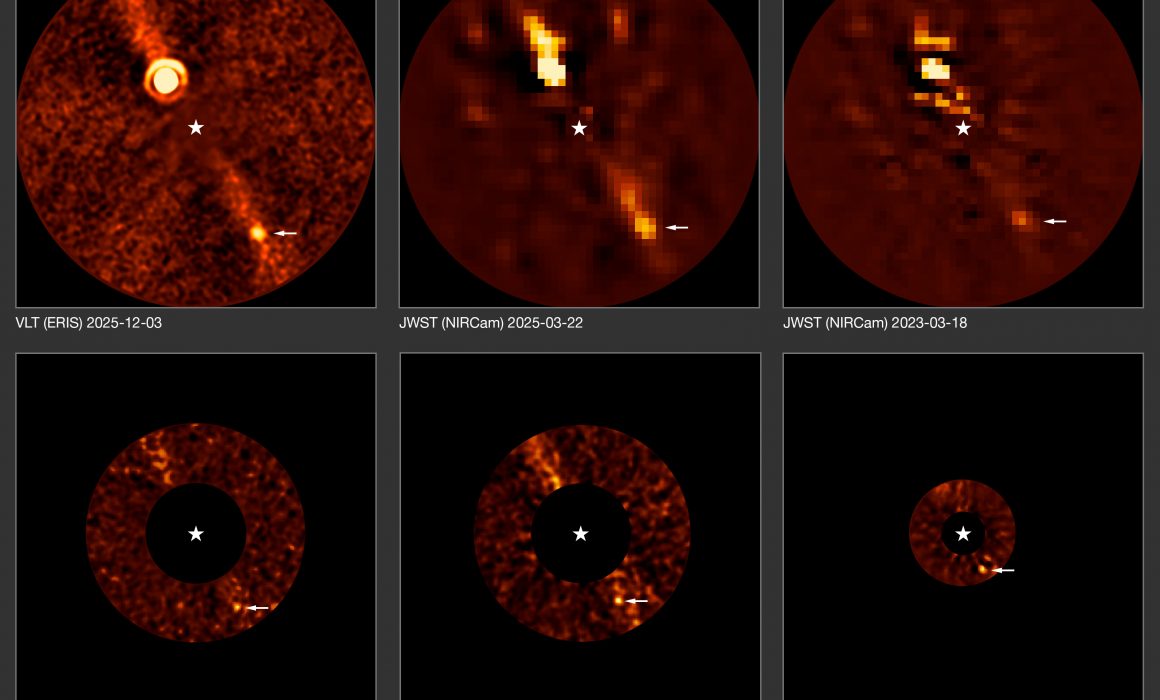
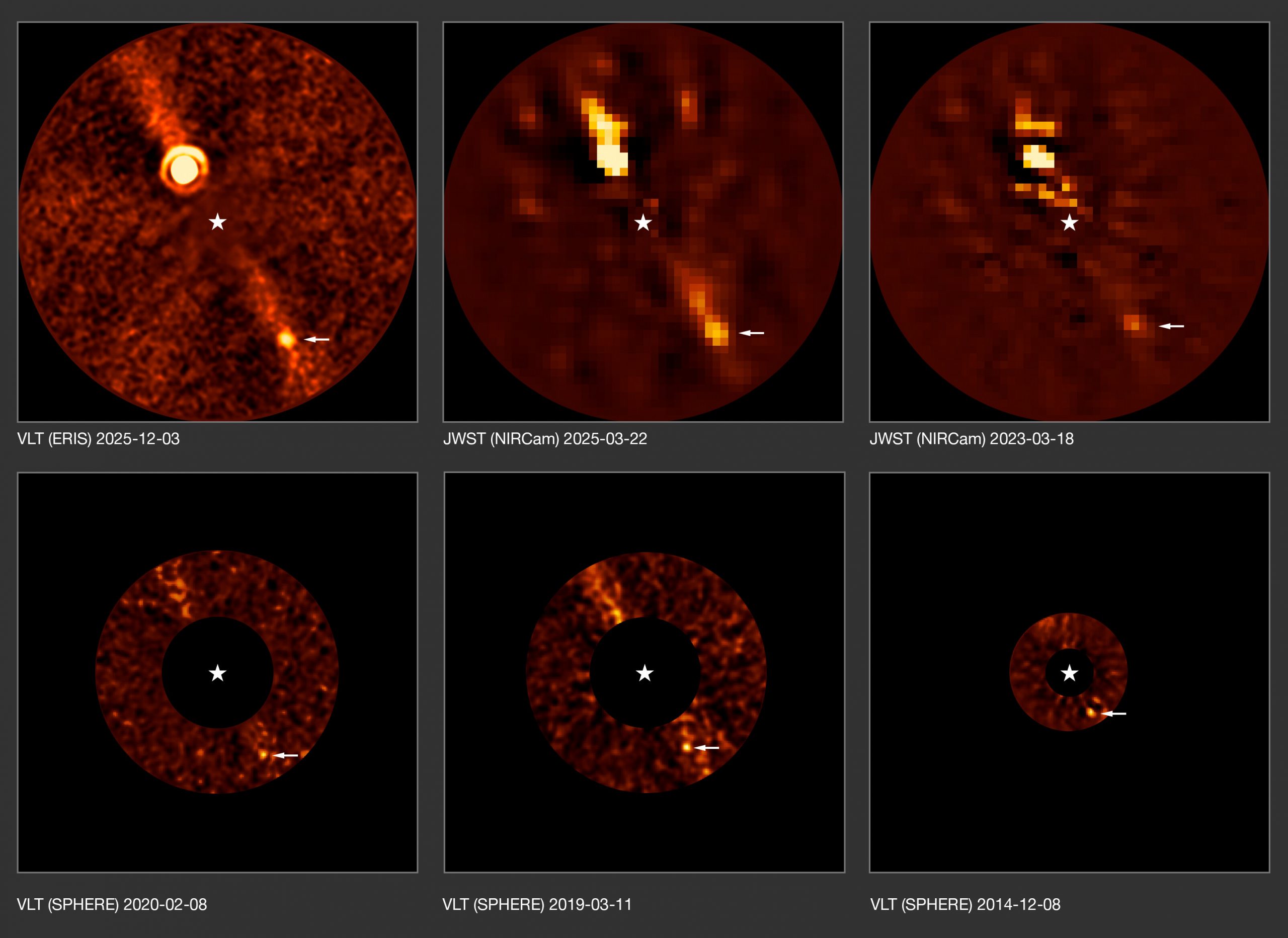
Astronomers utilizing the European Southern Observatory’s Very Large Telescope and NASA’s James Webb Space Telescope recently captured Beta Pictoris d, the faintest exoplanet ever directly imaged. Weighing 2.4 times the mass of Jupiter, this cold gas giant was uncovered not by launching a new space mission, but by digging through 11 years of archived observational data where it sat hidden in the glare of neighboring stars. Dr. Chris connects this cosmic image to retirement planning, showing how reviewing a client’s historical financial data with the right lenses can reveal hidden tax and income opportunities already sitting right under their nose.
Image Credit: ESO/B. Sutlieff, M. Bonse et al.

Sign Up for The Launch
The Launch is a weekly email from Dr. Chris and his team. It’s full of retirement tips, news, listener questions & more, straight from us to your inbox. Get smarter about retirement in just 5 minutes every week. Let’s go!
Episode Resources
- 2026 Mid-Year Market Outlook — James Liu, CFA
Episode Transcript
Introduction
Dr. Chris Mullis, PhD, CFP®: Looking at the nightly news might make you feel like your financial world is full of instability. But if you look past the media noise and look directly at the hard data, the reality of the markets right now presents an entirely different, highly strategic runway for your retirement planning.
Are you ready?
NASA: 3, 2, 1, 0 and lift off. Lift fell Americans return to space as discovery clears the tower.
Dr. Chris Mullis, PhD, CFP®: Welcome back to Retirement Isn’t Rocket Science. I’m your host, Dr. Chris Mullis. I used to build maps of the universe using NASA’s space telescopes. Today, I build retirement roadmaps for people like you. As a certified financial planner with 21 years of experience, I’m here to help you lower your taxes, strengthen your portfolio, and give you the confidence and the capacity to spend more.
Regardless of where you’re listening or watching, be it on Apple Podcast, Spotify, YouTube, or your favorite app, don’t forget to subscribe or follow so you don’t miss a single show. And please share the podcast with a friend or a family member who you think might benefit from it.
Help us grow our audience. Together, let’s fuel, let’s guide, and let’s educate as many people as possible to successfully launch into that greatest chapter of our lives, retirement
In today’s show, we’re taking a mid-year pulse of the economy and the investment markets and what it all means to retirement investors like you.
Our listener question spotlights the newer escape hatch, how to flip ordinary income taxes into low capital gains rates on your company stock. And hidden in the glare, what the faintest planet ever imaged teaches us about patience and unlocking hidden value
Retirement Briefing Room
Dr. Chris Mullis, PhD, CFP®: Welcome to the Retirement Briefing Room. Today, we are diving deep into a comprehensive mid-year analysis titled “2026 Mid-Year Market Outlook,” written by James Liu and published at kitces.com. James is the founder and CEO of Clearonomics and a former global market strategist with J.P.
Morgan
When you’re navigating the five to 10 years before retirement or if you’ve recently transitioned into it, managing your portfolio requires a shift in perspective. You are no longer just focused on pure accumulation. You’re focused on preservation, sustainable distributions, and tax efficiency.
The first half of twenty twenty-six has provided plenty of reasons for headline anxiety, ranging from global conflicts to stubborn economic shifts. Yet despite all the noise, the S&P 500 managed to clock twenty-four new record highs in the first six months of the year, ultimately generating a ten percent return when you factor in dividends.
This performance was heavily supported by corporate earnings, which expanded at double-digit rate of twenty-one percent over the past year. This divergence between what we read in the news and what happens in the markets illustrates a crucial concept for seasoned investors. Market performance and uncertainty are often just two sides of the same coin.
Think of it like a spacecraft passing through atmospheric turbulence. The exterior might shake, but the forward momentum depends entirely on the underlying propulsion system. In financial terms, that engine is corporate earnings growth. Leading retirement planners consistently see that investors who win are the ones who refuse to let near-term headline anxiety alter their long-term asset allocation in fact, the positive momentum in twenty twenty-six extended well beyond US large cap stocks. Emerging markets were standout leaders surging by nearly twenty-four percent due to growing global demand for technology components in regions like South Korea and Taiwan.
Coupled with a moderating US dollar, small cap equities advanced twenty-three percent. On a sector level, energy gained nearly twenty percent on a total return basis, following the spring oil disruptions, while industrials and information technology posted gains of twenty percent each.
This broad participation highlights why a highly diversified structure is so vital for your retirement portfolio. Relying on a single sector creates unnecessary volatility, whereas spreading your wealth across varied asset classes provides structural balance
Now, while hitting 24 new all-time highs sounds like a broad-based victory, if we look beneath the hood, we find that this growth wasn’t distributed equally.
Much of this is driven by the massive concentration of the Magnificent Seven technology firms, which returned a staggering 300% from the beginning of 2023 through the end of the second quarter of 2026
for an investor protecting a substantial nest egg, rebalancing away from heavy tech concentrations and managing the embedded capital gains taxes is critical to prevent sudden market swings from throwing your retirement trajectory out of alignment
While managing this internal tech exposure is an ongoing portfolio challenge, the first half of the year also tested our discipline with external global shocks, specifically coming out of the international energy sector. Geopolitical events played a major role in early twenty twenty-six, particularly the conflict involving Iran, which temporarily disrupted oil transportation through the crucial Strait of Hormuz.
While these events caused temporary market jitters, history demonstrates that energy shocks rarely leave a permanent scar on long-term market valuations, especially since the United States remains the world’s leading oil producer, providing a natural buffer against external supply shocks
Naturally, when energy transport gets squeezed, the financial ripple effects travel straight to the consumer, which leads us directly to the next major piece of the puzzle, headline inflation. These energy disruptions fed directly into headline consumer prices, lifting the consumer price index to a multi-year high of four point two percent year-over-year in May, with the energy subcomponent jumping twenty-three and a half percent. But if you look beneath the surface at core CPI, which strips out volatile food and energy costs, inflation sat at a much more palatable two point nine percent.
This gap is a clear signal that the inflationary pressure is a localized supply-side shock rather than a broad demand-driven problem across the entire economy. For a retiree, understanding this distinction is crucial for income planning.
While the rate of price increases has slowed, actual prices are not dropping down to prior levels, which means your long-term retirement income strategy must still incorporate assets that outpace inflation to preserve your purchasing power.
This delicate balance between temporary energy spikes and broader economic prices is exactly what the decision-makers at the Federal Reserve are wrestling with right now .
The federal funds rates currently sits between three point five percent and three point seven five percent following cuts that began in late twenty twenty-four. But a tight labor market and elevated headline inflation have left the Federal Open Market Committee deeply divided.
Half of the committee expects rates to remain completely steady through the end of the year, while the other half is anticipating potential rate hikes. Furthermore, the Fed has continued to shrink its balance sheet, which now stands at six point seven trillion, down from its historical peak of nearly nine trillion in twenty twenty-two. Given Chair Warsh’s historical preference for a leaner central bank footprint, further reductions could lie ahead, which may influence borrowing costs across the broader financial system
But Chair Warsh isn’t just looking at inflation data to map out interest rates. He’s also tracking the second half of the Fed’s dual mandate. That is the health of the American worker. In the employment sector, the labor market has shown clear signals of stabilization. Non-farm payrolls added a modest fifty-seven thousand jobs in June, maintaining a healthy three-month moving average of one hundred and eleven thousand.
Simultaneously , The unemployment rate fell to four point two percent, staying well below the historical average of five point nine percent since nineteen sixty. Wage growth is holding steady at three point five percent year over year, which is successfully outperforming core inflation, helping to protect real consumer spending power.
A stable job market combined with steady higher interest rates might sound like a mixed bag for corporations, but for a retiree looking to secure a predictable paycheck, it creates an absolute goldmine in an asset class that was essentially dead for a decade, the bond market.
For investors focused on wealth preservation, the silver lining of this sustained higher rate environment is a massive resurgence of opportunity in fixed income. The ten-year US Treasury yield is currently at four point three eight percent, and the two-year yield is at four point zero seven percent.
Investment-grade corporate bonds are yielding five point one percent and high-yield corporate bonds are yielding seven point two percent. These metrics mean that high-quality bonds have officially returned to their traditional dual role as true portfolio stabilizers and reliable income generators
With fixed income yields looking this attractive, it highlights the heavy opportunity cost of a habit many investors picked up during the recent volatility, sitting on massive piles of uninvested cash.
Spurred by market anxiety and the highest nominal yields in years, total assets parked in money market funds have ballooned to a record seven point eight trillion dollars. While keeping cash for a near-term emergency fund or a clear liquidity need is perfectly sound financial planning, letting excess wealth sit in short-term instruments introduces a massive reinvestment risk when those short-term yields eventually decline.
More importantly, with headline inflation running just recently at four point two percent at the midyear, a short-term cash yielding position is guaranteed to produce negative real returns, quietly eroding your wealth over time. Looking at long-term history since nineteen twenty-six, a single dollar invested in the stock market grew to roughly twenty-two thousand dollars, and a dollar invested in long-term bonds grew to nearly a hundred and nineteen dollars, while consumer costs over the same period rose from one dollar to nineteen dollars.
Cash may feel comfortable, but over a multi-decade retirement, failing to outpace the real cost of living is a major strategic error
. Achieving a smooth financial trajectory through your retirement years does not require predicting the next Fed move or guessing the outcome of an election.
It requires filtering out the media noise , understanding the structural layout of your portfolio, and making data-driven decisions that align your investments with your actual life goals. Now, let’s head over to Mission Control to answer your financial questions and get you retirement ready
Ask Mission Control
What if you could legally force the IRS to cut the tax rate on your hard-earned retirement savings by nearly half? If you’ve spent decades building up company stock in your company’s 401, you need to know about a powerful tax loophole, and that’s exactly what we’re talking about in today’s Ask Mission Control.
This week’s question comes from Gwen. She writes, “I’ve worked for the same company for 20 years. My company is publicly traded. Over those years, they’ve given me a higher 401match if I took it in company stock. I know I shouldn’t have built up that concentration risk, but now that I have it, , and I’m retiring soon, I’ve read about a strategy called the net unrealized appreciation.
Is that something I should be considering?”
Gwyn, first of all, congratulations on a twenty-year career at your company. Now that you’re approaching the retirement launch pad, handling that stock position within your 401correctly is perhaps one of the most crucial financial maneuvers you will make. When most people retire, they move their entire 401into a traditional IRA.
This keeps the money tax-deferred, which sounds great on the surface. However, every single dollar you pull out of a traditional IRA down the road is taxed at ordinary income tax rates, which currently scale all the way up to thirty-seven percent. The net unrealized appreciation, or NUA strategy, N-U-A, is a specialized tax detour designed specifically for highly appreciated company stock held inside an employer-sponsored plan.
Instead of moving all that stock to an IRA, the IRS allows you to move the company stock out of the 401and straight into a standard taxable brokerage account. When you execute a NUA strategy, your retirement nest egg splits into two distinct paths. Think of it like a space capsule re-entering the atmosphere and separating from its heavy booster.
The first path is the cost basis, which simply is the original dollar value of the stock when the employer contributed to your account years ago. You must pay ordinary income tax on this cost basis immediately in the tax year you make the move. The second path is the net unrealized appreciation, which is the total growth or profit that the stock has accumulated over your twenty-year career.
Instead of facing heavy ordinary income tax rates on this massive growth chunk, the IRS allows you to lock in long-term capital gains tax rates on it. Because long-term capital gains rates top out significantly lower than ordinary income tax rates, this single pivot can save a diligent saver hundreds of thousands of dollars in lifetime taxes.
But it’s important to recognize the net unrealized appreciation, the NUA, doesn’t always make sense. Even if you have cash sitting in a bank account to pay the immediate tax bill, executing a NUA strategy can sometimes leave you with less money in the long run than a standard traditional IRA rollover.
It requires a rigorous mathematical trade-off analysis before pulling the trigger
In my retirement planning firm, we evaluate a scenario like this with three primary variables. Number one, the cost basis ratio. As a general rule, nUA is most powerful when the cost basis is twenty percent or less of the stock’s current market value. If your company stock is worth a million dollars and your cost basis is a hundred thousand, so that’s a ten percent ratio, you’re shielding ninety percent of the wealth from heavy ordinary income tax.
If your cost basis is six hundred thousand, so it’s sixty percent ratio, you’re paying ordinary income tax upfront on the majority of the money, which completely wipes out the benefit of the strategy. Variable number two, the lost tax deferral trade-off. When you roll a 401in into a traditional IRA, one hundred percent of that money continues to compound completely tax-deferred.
Under the newest strategy, once the stock is moved to a taxable brokerage account, any future growth, dividends, or mutual fund distributions face ongoing taxes. If you do not plan to touch this money for fifteen or twenty years, the long-term compounding power of the tax-deferred IRA can actually outperform the immediate tax savings of the newest strategy.
And variable number three, diversification friction. Inside a traditional IRA, you can sell your company stock and buy a diversified mix of low-cost index funds instantly with zero tax consequences. With the newest strategy,
you must hold the stock in a taxable account the exact moment you sell that stock to diversify and protect your portfolio from concentration risk, you trigger an immediate long-term capital gains tax bill
To run this analysis accurately, a retirement planner models a hypothetical scenario mapping out your estimated future tax brackets against your investment time horizon. If you intend to spend the money within three to five years of retirement, NUA often wins because it unlocks the funds at lower capital gains rates right away.
If you intend to leave the money alone for decades, the IRA rollover frequently wins because NUA stock does not receive a stepped up in basis at your death, meaning your heirs will inherit your historic capital gains tax liability.
Gwen, to help determine if this strategy actually makes sense for your specific situation, you’ll need to consider, first, what is the approximate total value of the company stock compared to its original cost basis? Two, what are your estimated income tax brackets both now and once you’ve officially retired?
And three, what is the general timeline for when you expect to start spending these specific funds? Gwen, thanks for that great question. Again, congratulations on a great career and I hope you have a fantastic retirement. If you’ve got a retirement question that you’d like us to answer on the show, head over to retirementisntrocketscience.com and click ask a question, or you can skip to the front of the line by calling Mission Control at seven zero four two three four six five five zero and record your audio question
Now let’s look at a cosmic game of hide and seek, a groundbreaking discovery in deep space, and what it teaches us about finding hidden treasures right under our noses
NASA: In Discovery Houston, we’ve got a good picture of Steve.
Retirement Big Picture
Dr. Chris Mullis, PhD, CFP®: Welcome to the Retirement Big Picture part of our show. This is where we look up and look out to expand our appreciation and understanding of our amazing universe. Today, we’re diving into an incredible piece of news that just landed from the international astronomical community.
Astronomers have officially discovered a brand-new planet, the third planet found orbiting a relatively nearby star called Beta Pictoris. Now, this isn’t just any planet discovery. This new world, named Beta Pictoris d, is officially the faintest exoplanet ever directly imaged from Earth.
To give you an idea of how monumental this is, direct imaging means we aren’t just inferring the planet is there because the star wobbles or it dims. We’re actually capturing the physical light of the planet itself, like a photograph. And Beta Pictoris d is a staggering one hundred times fainter than its sibling, Beta Pictoris b, which was already a massive technological feat to capture years ago.
But here’s the real kicker and the reason I wanted to bring it to the show today. It wasn’t discovered by building a brand-new space telescope or launching a fresh mission. The data were already sitting there. Astronomers were actually analyzing new images from the European Southern Observatory’s Very Large Telescope.
That’s the VLT in Chile. They were trying to study the older, well-known planet in the system. While looking at the new data, they noticed a tiny, faint anomaly. They thought, “Wait, is there something else there?”
To confirm this suspicion, they didn’t wait for years for new observational time to be granted and the telescope to bring new data. Instead, they went backward. They went digging into the science archives. 11 years of past observations stored in the vaults. And to their absolute joy, it popped out. The planet had been captured in multiple images dating all the way back to 2015, hiding plain as day in the glare of its larger planetary neighbors and its host star.
It was a classic cosmic game of hide and seek, and the data were sitting in the archive all along, just waiting for the right tool and the right question to unlock it. But the story gets even better because NASA and its international partners got involved. An independent team of scientists led by researchers in the United States used the premier space observatory, that is the James Webb Space Telescope, to look at the exact same planetary system.
They utilized Webb’s Near Infrared Camera and independently discovered the exact same planet. What does that recent JWST image tell us? It gives us the vital statistics of this hidden world. Webb confirmed that Beta Pictoris D is a gas giant, structurally similar to our own Jupiter or Saturn.
However, it’s much further out in its orbit than its sister planets, taking a very long, cold path around its host star. Because it’s relatively cold, it doesn’t glow brightly in infrared, making it incredibly faint. While the other two planets in the system are absolute behemoths, about 10 times the mass of Jupiter, Beta Pictoris D is only 2.4 times the mass of Jupiter.
That makes it one of the lightest, least massive planets ever directly imaged from the ground or space
as I read through this discovery, I couldn’t help but draw a parallel to the work that we do every day here at Mission Control and in my retirement planning firm. Our listeners are what we call diligent savers. They’ve spent thirty, forty, sometimes fifty years working hard, living within their means, and quietly accumulating a beautiful retirement nest egg.
You’ve accumulated decades of financial archival data, old 401K statements, IRAs, tax histories, real estate deeds, and insurance policies. Oftentimes, when people approach retirement, they look at their financial system and only see the big, obvious things. They see the Beta Pictoris B of their portfolio, the total net worth number at the bottom of the screen.
But just like the astronomical archive, when a professional advisor, a certified financial planner, a retirement specialist looks through your historical financial data with the right set of lenses, we often find massive hidden opportunities that have been sitting there in plain sight for a decade.
Perhaps it’s a hidden tax strategy, a structural opportunity for a Roth conversion sequence, or an optimized Social Security strategy that perfectly anchors the rest of your retirement trajectory, just like that faint planet anchored the debris disk for Beta Pic. You don’t need to reinvent the wheel or take massive new risks to optimize your future.
Sometimes the treasures are already hidden in the data you’ve built over a lifetime. You just need a partner and the tools and experience to filter out the glare and bring them to light. As the scientist noted, finding these faint hidden systems is the holy grail of discovery because they teach us how everything connects and evolves over time.
The same is true for your wealth. When you look at the big picture, analyze the archives, and optimize the details, you gain the ultimate peace of mind for the greatest chapter of your life. By the way, you’ll find the Beta Pictoris D image in this week’s newsletter called The Launch.
You can sign up for The Launch at retirementisntrocketscience.com.
Conclusion & Action Items
Dr. Chris Mullis, PhD, CFP®: Today we took a close look at where the economy and the market stand at the midpoint of twenty twenty-six to bring clear data and true perspective to your retirement runway. The past six months are a vivid reminder that headline volatility does not mean a broken trajectory. Now it’s time to open the hatch.
Think of this next step as your spacewalk. You’re stepping out of the media noise into the operational environment. Where real adjustments happen. Overlaying today’s macroeconomic insights onto your personal plan so you can worry less and retire more.
This isn’t a passive float. This is where the critical work gets done to secure your financial future. To move from flight theory to execution, here are your next primary mission objectives. Number one, analyze your equity portfolio concentration. Work with your retirement professional to audit your exact exposure to the S&P 500’s top technology firms, ensuring that recent market run-ups haven’t accidentally left your nest egg over-concentrated in a single sector.
Number two, review cash holdings and reinvestment risk. Evaluate any cash or money market fund allocations exceeding your true short-term liquidity needs to protect your wealth from negative real returns against headline inflation like four point two percent. And number three, optimize your fixed income strategy.
Capitalize on the positively sloped yield curve and elevated bond yields by locking in predictable long-term cash flows through high-quality corporate and treasury bonds. I challenge you to take one idea from today’s show and put it into practice this week to make your retirement even better. Thank you so much for joining me.
You’ve spent a lifetime doing the hard work of accumulating your wealth. Now let’s do the smart strategic planning to secure it. Until next time, keep your eyes on the horizon and enjoy the ride. You are go for retirement.
Credits
Dr. Chris Mullis, PhD, CFP®: We thank the National Aeronautics and Space Administration for providing the radio communications between the space shuttle astronauts and the flight controllers.
Disclaimer
This show is for informational and entertainment purposes only. It is not specific tax, legal, or investment advice. Before considering acting on anything you hear in this show, first consult with your own tax, legal, or financial advisor